Comment choisir des sweats à capuche d'ingénieur qui vous vont bien
Partager
Ce sweat à capuche bon marché avec un motif de plan aléatoire révèle généralement ses défauts rapidement. L'impression se craquelle, la coupe devient informe aux mauvais endroits, et la blague semble avoir été écrite par quelqu'un qui n'a jamais touché une machine, ouvert un modèle CAO, ou assisté à une analyse des causes profondes. Si vous cherchez à choisir des sweats à capuche d'ingénieur, la vraie question n'est pas seulement ce qui a l'air bien sur une page produit. C'est de savoir si le sweat à capuche respecte réellement le métier, tient bon à l'usage réel et a toujours du sens après le dixième lavage.
Les ingénieurs et les professionnels de la fabrication sont difficiles à convaincre, et ce pour une bonne raison. Vous remarquez les mauvaises tolérances, les matériaux faibles, les affirmations vagues et l'exécution paresseuse. Le même filtre devrait s'appliquer aux vêtements. Un bon sweat à capuche d'ingénieur ne consiste pas à apposer des engrenages sur de la polaire et à appeler cela technique. Il s'agit de la coupe, du tissu, de la construction, de la qualité d'impression, et de savoir si le design semble provenir de quelqu'un qui a réellement été sur le terrain.
Comment choisir des sweats à capuche d'ingénieur sans acheter de la camelote
Commencez par le cas d'utilisation, car cela change tout. Un sweat à capuche pour les matins froids au bureau, les révisions de conception tardives et les courses en atelier après les heures de travail n'a pas besoin des mêmes spécifications qu'un autre que vous porterez sous une veste de travail, pour les courses du week-end, ou à la maison. Si vous voulez quelque chose à superposer sous un vêtement d'extérieur, le volume compte. Si vous voulez quelque chose qui se suffit à lui-même, le poids et la structure du tissu sont plus importants.
Cela semble évident, mais la plupart des mauvais achats se produisent lorsque les gens achètent en se basant uniquement sur le graphique. Le design attire le clic. Le vêtement décide s'il reste dans la rotation.
Un sweat à capuche léger peut être approprié si vous avez chaud, travaillez à l'intérieur, ou détestez le molleton rigide. Un sweat à capuche plus lourd est généralement mieux construit, tombe mieux, et survit aux usages répétés avec moins de torsion et d'étirement. Aucun n'est automatiquement meilleur. Cela dépend si vous voulez de la mobilité et une superposition plus facile ou plus de structure et de chaleur.
La coupe est le filtre suivant. Les ingénieurs ont tendance à détester les vêtements qui exigent des excuses. Si un sweat à capuche ne fonctionne que lorsque vous êtes parfaitement immobile, ce n'est pas un bon sweat à capuche. Vérifiez si le corps est long ou court, si les épaules sont étroites et si les manches rétrécissent après le lavage. Une coupe ajustée peut sembler plus nette, mais une coupe trop ajustée devient vite ennuyeuse si vous déplacez de l'équipement, transportez des outils ou passez votre journée à vous étirer sur des bancs et des chariots.
Ce qui compte réellement dans un sweat à capuche d'ingénieur
Le mélange de tissus est plus important que la plupart des descriptions de produits ne l'admettent. Les sweats à capuche à forte teneur en coton sont généralement plus agréables au contact de la peau et vieillissent souvent avec plus de caractère. Le polyester dans le mélange ajoute de la tenue, un séchage plus rapide et souvent une meilleure stabilité d'impression. Trop de polyester, cependant, peut rendre un sweat à capuche lisse, fin ou générique. Trop de coton sans une construction décente peut entraîner un rétrécissement et un affaissement.
Pour la plupart des gens, le juste milieu est un mélange équilibré avec suffisamment de coton pour être substantiel et suffisamment de polyester pour éviter que le sweat à capuche ne se transforme en un chiffon informe après des lavages répétés. Si la marque donne des spécifications de tissu réelles, c'est un bon signe. Si la description du matériau ressemble à un texte de remplissage, supposez la même chose pour le reste de la fabrication.
La construction, c'est là que la qualité cesse d'être du marketing pour devenir visible. Regardez la tenue des poignets, les côtes, les coutures des poches et l'uniformité des coutures. Les vêtements à coutures latérales conservent généralement mieux leur forme que les ébauches tubulaires les moins chères. Une capuche bien faite doit se poser proprement au lieu de s'affaisser en un panneau supplémentaire mou. Les cordons de serrage sont facultatifs. Une construction soignée ne l'est pas.
Ensuite, il y a la qualité d'impression. C'est là que beaucoup de vêtements à thème ingénieur échouent. Un design intelligent mal imprimé reste un mauvais produit. Si l'encre ressemble à une épaisse plaque de plastique, il y a de fortes chances qu'elle se craquelle rapidement ou s'use de manière inesthétique. Si l'impression semble volontairement délavée, assurez-vous que c'est réellement intentionnel et non pas simplement une mauvaise application. Les meilleures impressions semblent intégrées au vêtement, et non collées comme une pensée après coup.
La broderie peut être excellente pour les petites marques ou les motifs discrets, mais elle n'est pas automatiquement synonyme de qualité supérieure. Une mauvaise broderie froisse le tissu et fait que la zone de la poitrine tombe étrangement. Les grands motifs brodés peuvent également rendre un sweat à capuche plus lourd et plus rigide à l'endroit exact où il ne faut pas. Encore une fois, cela dépend du design.
Le graphique doit ressembler à votre monde
Si vous voulez savoir comment choisir des sweats à capuche d'ingénieur qui ne semblent pas génériques, faites attention au langage. Un véritable vêtement d'ingénieur n'a pas besoin de s'expliquer à tout le monde dans la pièce. En fait, cela fonctionne généralement mieux quand ce n'est pas le cas.
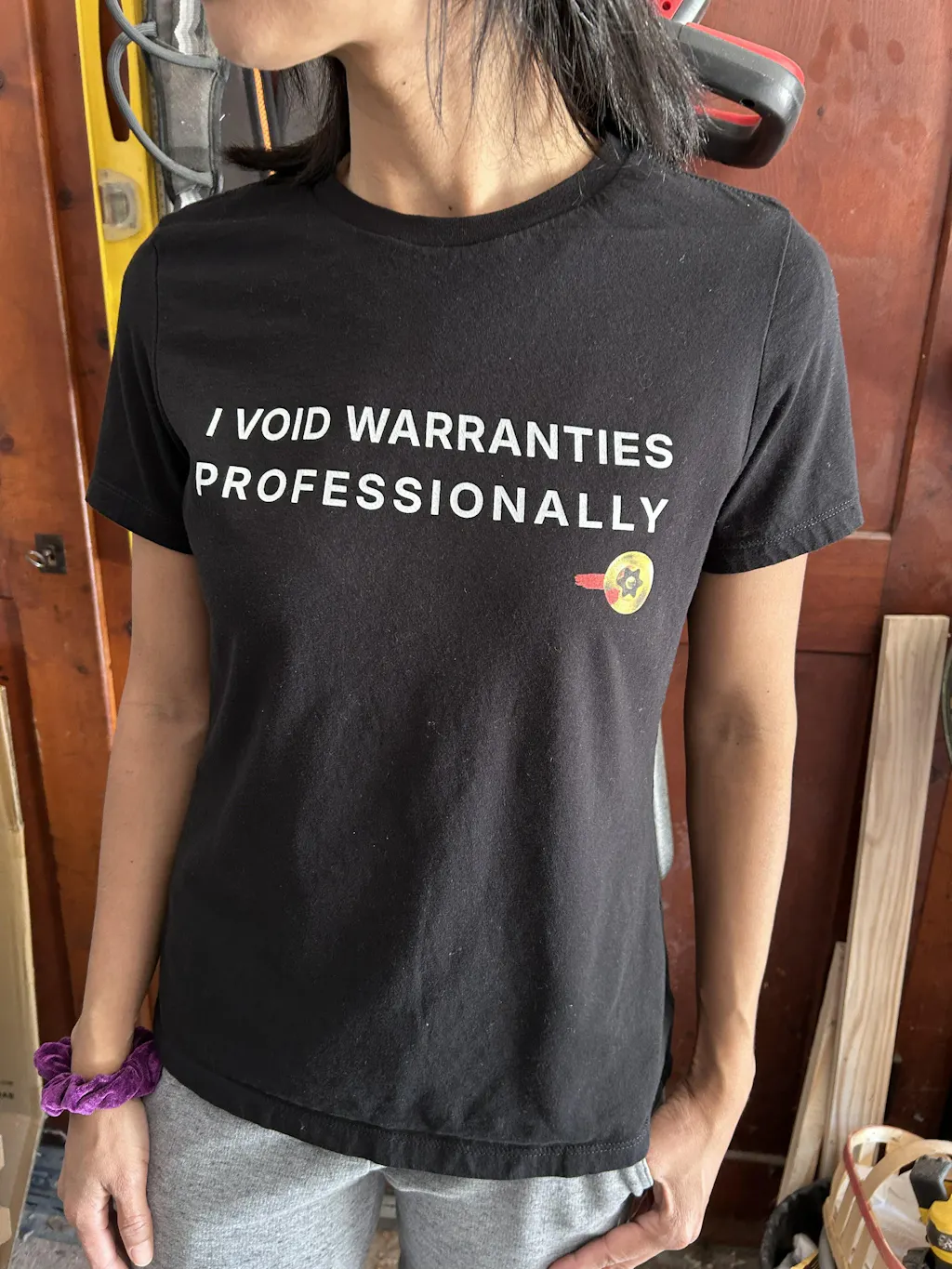
Il y a une différence entre la reconnaissance par les initiés et l'humour de nouveauté généraliste. Les produits génériques STEM s'appuient sur des équations, des robots et des blagues éculées qui pourraient tout aussi bien s'adresser à un club scientifique de collège. Les meilleurs vêtements d'ingénierie sont plus étroits et plus spécifiques. Ils font référence aux habitudes de travail, aux difficultés de processus, aux normes techniques, à la culture de la fabrication et au genre d'humour qui ne fait mouche que si vous avez passé du temps dans cet environnement.
C'est pourquoi la subtilité est importante. Un sweat à capuche basé sur les CAPA, l'analyse des causes profondes, les tolérances d'usinage, la finition de surface ou les problèmes de production peut en dire plus qu'un grand graphique bruyant qui s'efforce trop d'être drôle. Le but n'est pas de s'habiller comme un mème ambulant. Le but est de porter quelque chose qui semble précis.
Si le design semble avoir été conçu par un comité, ignorez-le. Si vous avez l'impression qu'il vient de quelqu'un qui sait ce qu'un mauvais changement de révision peut faire à une semaine, vous êtes probablement sur la bonne voie.
Ne négligez pas le confort, mais n'achetez pas seulement la douceur
Beaucoup de sweats à capuche se vendent sur une seule ligne : super doux. Très bien. La douceur compte. Personne ne veut de la polaire rêche. Mais la douceur le premier jour n'est pas la même chose que la durabilité après six mois.
Certains sweats à capuche sont très agréables dès leur sortie de l'emballage et se dégradent rapidement. Ils boulochent, perdent leur forme et acquièrent cette texture de surface fatiguée qui les fait paraître plus vieux qu'ils ne le sont. D'autres sont légèrement plus structurés au début et s'assouplissent mieux avec le temps. Si vous vous souciez de l'usure à long terme, ne vous fiez pas à l'argumentaire de vente du premier contact.
C'est l'un de ces domaines de compromis. Un intérieur brossé très doux est excellent pour le confort, mais il peut aussi être plus chaud et parfois perdre plus de fibres avec les lavages répétés. Un tissu de surface plus dense peut sembler moins moelleux au début, mais il permet souvent une impression plus nette et une meilleure apparence à long terme. Si votre standard est un sweat à capuche que vous portez constamment, et non cinq jetables, le comportement à long terme compte plus que la douceur du premier jour.
Lorsque vous offrez un cadeau, la crédibilité compte encore plus
Les sweats à capuche d'ingénieur sont faciles à rater comme cadeaux parce que les personnes extérieures achètent souvent le design le plus évident au lieu du plus précis. Le choix le plus sûr n'est pas la blague la plus bruyante. C'est celle qui semble assez spécifique pour être réelle sans être si niche que seul un titre de poste précis la comprend.
Si vous achetez pour un ingénieur mécanique, un machiniste, un ingénieur de fabrication, une personne de qualité ou un responsable R&D, réfléchissez à ce à quoi ils réagissent réellement. La plupart d'entre eux ne veulent pas d'humour de magasin de nouveautés. Ils veulent quelque chose qui montre que la personne qui l'achète comprend un peu leurs normes.
C'est là que les marques de niche dirigées par des fondateurs ont un avantage. Si les vêtements sont fabriqués par des gens qui connaissent la culture, les références sont généralement plus précises, la formulation est plus claire et les designs ne semblent pas empruntés. Cette différence est difficile à simuler. C'est aussi pourquoi une marque comme grabNade se démarque lorsque l'objectif est d'obtenir un équipement qui a du sens si vous y avez réellement été.
Une rapide vérification de la réalité avant d'acheter
Avant de vous engager, lisez les informations sur le produit comme vous liriez un dessin ou une fiche technique. Non pas parce que les vêtements ont besoin d'un dossier PPAP, mais parce que des informations vagues créent généralement des résultats vagues. Recherchez les détails réels du vêtement, les instructions d'entretien, les informations de taille et les images rapprochées qui montrent l'impression et la texture du tissu.
Les avis aident, mais seulement s'ils disent quelque chose d'utile. « J'adore » ne vous dit presque rien. Les commentaires sur le rétrécissement, la longueur des manches, la sensation de l'imprimé, la chaleur et les lavages répétés sont bien plus utiles. Si plusieurs acheteurs mentionnent que le sweat à capuche garde sa forme, s'ajuste de manière constante et survit à un lavage normal sans que le graphique ne se transforme en débris, c'est significatif.
Soyez également honnête quant à votre propre tolérance au compromis. Si l'authenticité du design vous importe le plus, vous pouvez accepter un prix légèrement plus élevé. Si le confort tout au long de la journée vous importe le plus, vous pouvez privilégier le tissu et la coupe plutôt que les références de niche. Le bon sweat à capuche est celui qui est porté, pas celui qui gagne un tableau comparatif théorique.
Un bon sweat à capuche d'ingénieur doit ressembler à une bonne ingénierie – un but clair, une exécution compétente, pas de faux drame. S'il taille bien, est résistant à l'usure et dit quelque chose que seuls les initiés comprennent pleinement, c'est généralement celui qui mérite de rester en rotation.