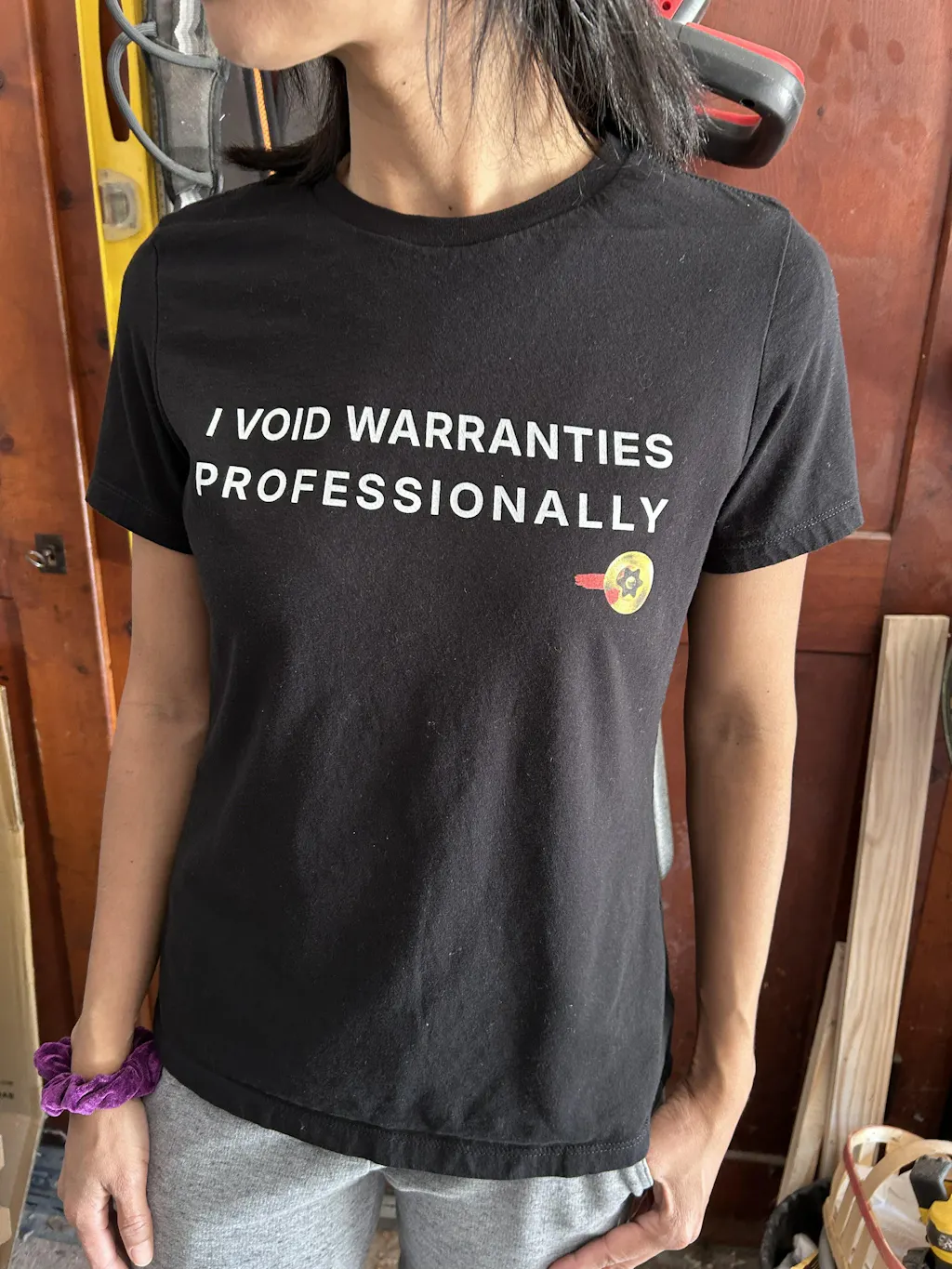
Engineering Inside Jokes Shirt: How to Read the Signal
What makes the best engineering inside jokes shirt? It may not be the one that gets the biggest laugh, but the one that makes the right person stop and say, “You know.” A familiar reference can signal shared experience in a way a generic pun cannot. Make it too specific, though, and the joke may miss anyone outside that discipline.
That is the balance engineers and gift buyers are looking for. Humor that could fit any office may feel generic, while a technical reference that only sounds convincing can miss how the work actually gets done. An insider joke lands when the details feel familiar to the people who have lived them.
This guide explains what makes technical humor recognizable, how to distinguish an engineering joke from generic workplace humor, and what to consider when choosing a shirt as a gift. We’ll look at shared context, discipline-specific references, and the recipient’s sense of humor, so you can assess a design even if you do not know every acronym yourself.
Key Takeaways
- Look for a reference rooted in real engineering work, not just technical-sounding words.
- Trace how a familiar detail leads to recognition and then to the humorous payoff.
- Match the joke’s specificity to its audience: accessible, discipline-specific, or deeply niche.
- Before gifting an engineering inside jokes shirt, consider the recipient’s discipline, interests, and where they’ll wear it.
- Explore how engineering experience can shape apparel for engineers, designers, and builders.
What Makes an Engineering Inside Joke Shirt Feel Like an Insider Signal?
An engineering inside joke shirt is apparel built around a technical reference that people with relevant engineering experience recognize. The reference might draw on a tool, a term, a design constraint, or a familiar problem-solving process. Its humor depends on shared context, not simply on technical vocabulary.
That distinction separates insider humor from a general science joke or broad workplace humor. A joke about lab coats or office meetings may be familiar to many people. A reference to debugging, tolerance stack-up, or design reviews points to situations engineers may have encountered directly. When the detail is accurate, recognition comes before explanation. When it only sounds technical, the joke can feel generic, with an engineering label added afterward.
That is the signal in an engineering inside jokes shirt: a small reference that lets peers identify a shared experience. Like an esoteric joke, it works because some of its meaning belongs to a particular group. That group could include engineers broadly, or people in a specific discipline, team, or stage of a project.
Why do engineers recognize some shirt jokes immediately?
Familiar terminology can compress a whole work experience into a few words. An engineer who has traced a bug, checked a tolerance, or revised a design after testing may recognize the situation without needing the shirt to explain it. The reference is shorthand: the reader supplies context from memory, and the humorous payoff follows.
Recognition is not universal. A software engineer may immediately connect with a debugging reference, while a civil engineer may not share the same everyday context. Even within one discipline, work history matters. Someone focused on testing may read a process joke differently from someone focused on early-stage design. Specificity creates connection when it matches the reader’s experience.
What does an inside joke communicate beyond the punchline?
A technical reference can signal professional identity and community membership. A compact phrase or visual can carry meaning because peers know the process behind it. Others may see only a diagram, symbol, or unfamiliar term. Someone with relevant experience may recognize the work situation and the humor attached to it.
The wearer does not need to intend a deeper message. They may simply like the joke. Still, people who understand the reference can read the shirt as a sign of shared language and experience. Accuracy matters: the right detail feels observant, while a misplaced term can make the signal fall flat.
How Technical Context Turns an Engineering Shirt Joke Into a Shared Reference
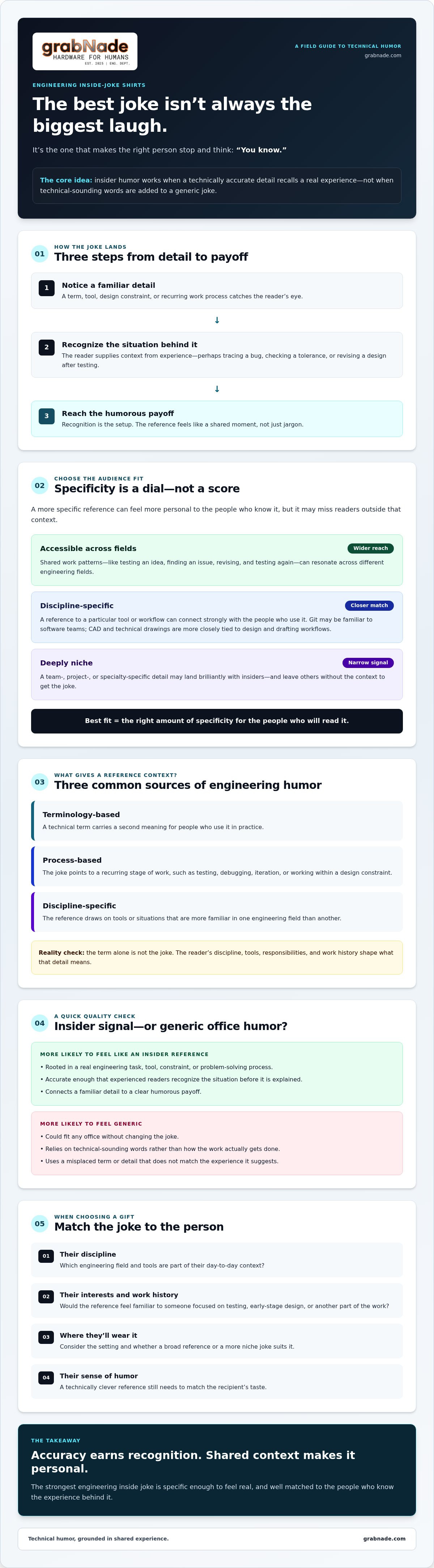
A technical joke usually lands in three steps: someone notices a familiar detail, recognizes the situation behind it, then reaches the humorous payoff. Remove the context and the same term may read like jargon. Get the context right and a few words can recall a chain of decisions, revisions, and unexpected results.
That context can come from different places:
- Terminology-based: A technical term carries a second meaning for people who use it in practice.
- Process-based: The joke points to a recurring stage of work, such as testing, debugging, iteration, or working within a design constraint.
- Discipline-specific: The reference draws on tools or situations more familiar in one engineering field than another.
Context determines whether technical humor lands. A reader’s discipline, tools, responsibilities, and work history shape which details feel familiar and what they imply. The term alone is not the joke. The recognition it triggers is the setup.
Which engineering references work across disciplines?
Some work patterns travel well. Engineers in different fields may recognize the cycle of testing an idea, finding an issue, revising the design, and testing again. Debugging and working within constraints can also be broadly familiar, even when the systems and methods differ. These references can reach a wider audience because they point to shared patterns, not identical jobs.
Tools and specialist vocabulary narrow the signal. A reference to Git may be familiar to software teams, while CAD and technical drawings are more closely tied to design and drafting workflows. That does not make one reference better than another. It changes who is most likely to recognize it. Engineers do not all use the same tools or share the same sense of humor. The engineering prankster legend offers a glimpse of how technical knowledge can shape humor within engineering communities.
Why do discipline-specific jokes feel more personal?
Specific references reflect details of a person’s work. Mechanical engineering humor might draw on CAD, fit, or physical constraints. Software references may involve Git, debugging, or version changes. Civil engineering may bring technical drawings and built environments into view, while electrical engineering has its own systems, components, and design concerns. These are broad distinctions, not rules: roles overlap, and no job title guarantees that a particular joke will land.
A targeted reference can feel personal because it says, “This is part of your working world,” rather than “This is a joke about engineers in general.” For a wider range of humor, browse funny engineering T-shirts. You can also explore grabNade’s engineering apparel for references grounded in engineering experience.
Engineering Inside Joke Shirts: Clever Reference or Joke Too Obscure?
Technical specificity is a tradeoff. A precise reference can make the right engineer feel seen, but it can also leave the intended wearer wondering what the joke means. An engineering inside jokes shirt does not need to make sense to everyone. It does need to make sense to the person it is for.
Use this comparison to judge whether the reference fits its audience:
- Accessible reference: Draws on a broadly familiar engineering situation. It is easier to understand across roles, though the joke may feel less personal.
- Discipline-specific reference: Uses terminology or a work situation associated with a particular field. It can feel more relevant to that audience, but may need more context for others.
- Highly niche reference: Points to a specialized tool, process, or shared team experience. It may be opaque to most people and exactly right for a close colleague or specialist.
Then check four things. Accuracy: Does the reference use the term or process as practitioners would recognize it? Clarity: Can the intended audience follow the setup? Audience fit: Does it match the recipient’s discipline or experience? Payoff: Does recognition lead to a humorous turn, rather than stopping at jargon? Obscurity is not proof of quality. Fit is the specification.
How can you tell if an engineering joke is technically accurate?
Check whether the reference reflects real usage, not just a plausible-sounding technical word. Be cautious of jokes that treat one team’s convention, tool, or workflow as universal across engineering. If the humor depends on a discipline-specific detail, ask someone who works in that area to check it. A quick review can catch a misplaced term before it undermines the joke.
When is an obscure technical reference the right choice?
A niche reference can make a strong gift for a close colleague or specialist when you know they will recognize the detail. It prioritizes personal recognition over broad readability. If you are less certain about the recipient’s work or humor preferences, a more accessible reference may be a safer match. Choose the level of specificity based on who will wear it and what they enjoy, not on how many people will miss the joke.
The same audience-first thinking applies to apparel beyond the punchline. Read the engineer’s uniform guide for a broader look at how insider design connects with professional identity. Before choosing a joke, verify the reference, picture the wearer, and decide whether the goal is a quick laugh or a signal only a few peers will catch.
How to Choose an Engineering Inside Joke Shirt for a Specific Person
A good gift starts with the person, not the job title. “Engineer” covers a wide range of work and personalities, so use what you know about the recipient to choose a reference they will actually enjoy. This checklist can help narrow the options.
- 1. Identify the recipient. Think about their interests, humor, and how they usually respond to technical jokes. Do not assume seniority, gender, or profession tells you whether they prefer subtle humor, wordplay, or a visual gag.
- 2. Pin down their discipline and current work. Consider what they do day to day, not just their formal title. A person working with software tools may appreciate a different reference from someone focused on physical design, testing, or infrastructure.
- 3. Check the reference. Does it connect to a tool, process, or topic they know? If it is highly specialized, look for a low-key way to confirm they recognize the subject. A technically accurate reference can still miss if it belongs to a different team or workflow.
- 4. Choose the audience and setting. Decide whether the joke should mainly resonate with peers or remain understandable to friends and family, too. Consider where the recipient might wear the shirt and whether they would enjoy explaining the reference.
Which details help match a shirt joke to an engineer?
Start with their discipline, current projects, and familiar tools. Then consider the humor they already enjoy: a quiet technical reference, a clever turn of phrase, or a design that carries the joke visually. These clues are more useful than broad assumptions about engineers as a group. If you are unsure, choose a reference connected to an interest they have mentioned rather than one selected from a job label alone.
Is an engineering inside joke shirt a good gift?
It can be. A shared reference shows that you paid attention to the recipient’s world, which can make the gift feel more considered than a generic workplace gag. The safest choice is a joke tied to a topic they have discussed or a familiar part of their work. For a niche reference, confirm they know it before choosing. For broader gift ideas, see the 2026 engineer gift guide.
Ready to look for a design that fits the recipient’s engineering interests? Explore grabNade’s engineering apparel.
How grabNade Approaches Engineering Inside Joke Apparel
A real engineering reference needs more than technical vocabulary. It needs context: a detail that reflects how people design, build, test, or optimize, followed by a payoff that makes sense to the intended audience. That is the difference between an engineering inside joke shirt that feels observed and one that simply adds jargon to a punchline.
grabNade designs and sells engineering T-shirts, hoodies, and mugs. The brand was founded and is operated by a professional with an engineering background, and its apparel and accessories are created by people with real engineering experience. That perspective can inform which details feel familiar and meaningful to engineers, designers, and builders. It does not mean every reference will suit every person or discipline. Audience fit still matters.
What does engineering experience add to apparel design?
Firsthand familiarity can help creators recognize the difference between a term that merely sounds technical and one tied to a real work situation. Design decisions, build constraints, iteration, and optimization all carry context that practitioners may recognize. That context can give humor a more grounded point of reference.
Experience is a useful lens, not a guarantee that every joke will work for every engineer. Roles vary, and teams develop their own tools, language, and habits. A reference that resonates with one group may not land with another. Before choosing a design, check its wording or visual and ask whether it fits the recipient’s interests and working world. Do not assume a technical-sounding design is automatically accurate or relevant.
Where can readers explore engineering-focused apparel?
Use four checks as you browse: accuracy, does the reference make sense? Audience, is it aimed at the right discipline or experience? Specificity, is it broad enough for the wearer, or intentionally niche? Personal relevance, does it connect with something they enjoy? These checks help separate a thoughtful choice from a generic one, whether you are shopping for yourself or someone else.
grabNade offers engineering T-shirts, hoodies, and mugs for people drawn to engineering-focused humor and identity. Review the available designs rather than assuming a particular reference will suit the recipient. The best match is one whose context the wearer recognizes and enjoys.
If you would like to see what is available, browse grabNade’s engineering apparel and mugs.
Choose a Reference That Fits the Person
The best engineering inside jokes shirt does more than use technical language. It gets the reference right, matches the wearer’s experience, and delivers a payoff they will appreciate. Broad humor can work across roles; a niche reference can feel especially thoughtful when you know the recipient will recognize it.
For a gift, start with what you know about the person: their discipline, interests, and preferred style of humor. Do not rely on job title alone. If a design depends on specialist knowledge, check that the reference fits their world.
grabNade is an engineering-focused apparel and accessories business founded and operated by a professional with an engineering background. Its products are created by people with real engineering experience, bringing a practitioner’s perspective to apparel for engineering communities. That experience can inform a design, but the right choice still comes down to the person wearing it.
Ready to look for a reference that feels relevant? Explore grabNade’s engineering-focused apparel, including T-shirts, hoodies, and mugs. Choose with care, trust what you know about the recipient, and let the right detail do the talking.
Inside jokes that land
- Rough Day Ra 12.5: a real surface-finish symbol for a rough day
- Thread Direction Agnostic: for anyone who has fought a left-hand thread
- Error 404: Common Sense Not Found: covers most standups
Browse more in Engineer T-Shirts.
Frequently Asked Questions
What makes an engineering inside joke shirt funny?
An engineering inside joke shirt is funny when its technical reference makes sense to the people it is meant for and leads to a clear payoff. The setup might draw on familiar terminology, a design constraint, or a problem-solving experience. Jargon alone is not enough. If the reference is inaccurate, or the audience cannot connect it to real work, the joke may feel like technical decoration rather than humor.
Which engineering jokes work across different disciplines?
Jokes about iteration, testing, debugging, and design trade-offs can resonate across several engineering fields because they reflect work patterns shared by different roles. A joke built around a particular tool or specialized process has a narrower audience. No reference works for everyone, though. Industries, teams, and individual experience vary, so consider what the intended wearer actually does instead of assuming every engineer shares the same technical background.
Can you wear an engineering inside joke shirt at work?
It depends on your workplace, the design, and the setting. A restrained technical reference may suit a casual office or team event, while a highly niche joke may be clearer among close colleagues. Check workplace dress expectations first. For customer-facing meetings or formal environments, consider a design that remains appropriate and readable to people outside your technical circle. When unsure, save a more specialized joke for a less formal setting.
Is a highly technical shirt joke better than a general engineering joke?
Not automatically. A specific reference can feel personal to someone who knows the subject, but it may confuse people outside that specialty. A broader joke can be easier to recognize, though it may feel less distinctive. Choose based on the wearer’s work and what matters most: a private moment of recognition or wider readability. More technical detail does not guarantee a stronger punchline, better accuracy, or a better fit.
How do I choose an engineering inside joke shirt as a gift?
Start with what the recipient works on, studies, or talks about, not just their job title. Think about familiar tools and processes, then consider whether they prefer subtle references, wordplay, or visual humor. If you cannot confirm they will recognize a niche topic, choose a broader reference. A thoughtful gift reflects the person’s interests. Extra technical terms will not make a design more personal if the recipient does not connect with them.
What happens if the engineering reference is too obscure?
A very specialized reference may be understood only by the wearer or a few colleagues. That can be a good fit for a close-knit team or someone who enjoys private jokes. But if you want the shirt to start conversations, a wider reference may work better. Before choosing a niche design, ask someone with relevant experience whether they understand it without a lengthy explanation. If not, check that the intended wearer will.
Should an engineering inside joke shirt name a specific discipline?
Use a discipline-specific reference if you know the wearer will recognize and enjoy it. Mechanical, software, civil, and electrical engineering involve different tools and work contexts, so a focused detail can make a design feel more relevant. For someone whose interests cross fields, a broader engineering reference may fit better. Base the choice on the person’s actual work and interests, not assumptions tied to their profession or job title.