Varför de flesta ingenjörs-t-shirts på marknaden är fel
Dela
Varför de flesta ingenjörs-T-shirtar
på marknaden är felaktiga
Sök på "ingenjörs-T-shirt" online. Varsågod. Ge det trettio sekunder. Vad du kommer att hitta är en anmärkningsvärt konsekvent katalog av misslyckanden: ordvitsar om periodiska systemet, kretskortstryck som ser ut som clipart, sarkastiska ingenjörsslogans som skulle få en riktig ingenjör att rygga tillbaka, och mycket Comic Sans-energi applicerad på koncept som förtjänar bättre. Marknaden för ingenjörskläder är enorm – och nästan helt felaktig.
Detta är inte ett estetiskt klagomål. Det är ett specifikationsfel. Produkterna finns, men de designades av människor som inte förstår kunden. Resultatet är en kategori full av föremål som tekniskt sett säger "ingenjör" på dem, samtidigt som de inte kommunicerar något som en faktisk ingenjör skulle känna igen som sant.
Låt oss köra rapporten om avvikelser.
## 01. De fem misslyckandesätten för generiska ingenjörsartiklar
Varje dålig ingenjörsklädsel misslyckas på ett av fem förutsägbara sätt. Dessa är inte slumpmässiga kvalitetsproblem – de är strukturella problem med hur kategorin byggdes, av vem och för vem.
Misslyckandesätt 1 – Fysikskämtet
Du har sett det: E=mc², F=ma, en Schrödinger-referens, något om fotoner. Dessa designidéer behandlar "ingenjör" som synonymt med "person som klarat gymnasiefysik". De är inte felaktiga, tekniskt sett. Men de kommunicerar inget om det faktiska jobbet. En maskiningenjör som felsöker ett problem med presspassning klockan 06:00 har ingen koppling till en Schrödingerekvation. En tillverkningsingenjör som kör första artiklarna tillbringar inte dagen med att tänka på ljusets hastighet. Fysikskämtet är den lataste möjliga förkortningen för "den här personen är teknisk", och det kostar ungefär tio sekunders kreativ ansträngning att producera.
Misslyckandesätt 2 – Sarkasm-mallen
Den andra kategorin: generell sarkasm applicerad på ingenjörsstereotypen. "Jag argumenterar inte, jag förklarar bara varför jag har rätt." "Jag har en examen i sarkasm." "Lita på mig, jag är ingenjör." Dessa finns i alla yrken och alla subkulturer – samma mall med ett annat substantiv insatt. Det finns ingen ingenjörsspecifik observation bakom dem. Ingen insiderkunskap. Ingen insikt i vad jobbet faktiskt innebär. Bara antydan om att ingenjörer är smarta och lite odrägliga, vilket – visst – men är inte en design, det är en platshållare.
Misslyckandesätt 3 – STEM-paraplyet
STEM-kläder utformade för att täcka alla täcker ingen specifikt. När en t-shirt är lika lämplig för en biologilärare, en mjukvaruutvecklare, en dataanalytiker och en maskinist, är den egentligen inte lämplig för någon av dem. STEM-kategorin existerar för att den är kommersiellt bekväm – bredare marknad, lägre designrisk. Men maskinisten med 20 års erfarenhet av CNC-utrustning och elektroingenjören som felsöker PCB-layouter delar inte en identitet bara för att de båda var tvungna att läsa kalkyl.
Misslyckandesätt 4 – Företagsgåvfällan
Företagsmärkta ingenjörsartiklar: polon med företagets logotyp, muggen från teamträffen, huvtröjan som hamnade i garderoben dag två. Dessa är inte ingenjörskläder. De är reklam som den anställde går med på att bära. De signalerar var någon arbetar, inte vem de är. Företagets logotyp är inte en identitet. Efter en omstrukturering, en sammanslagning eller en uppsägning blir huvtröjan omedelbart oanvändbar. Identiteten den bar var lånad, inte ägd.
Misslyckandesätt 5 – Problemet med den roliga programmerar-T-shirten
Det sista misslyckandesättet är det mest kulturspecifika: tech/utvecklar-crossover. Marknaden har bestämt att "ingenjör" betyder "mjukvaruingenjör", och att roliga programmerar-T-shirtar, kodnings-T-shirtar och utvecklarhumor är det självklara svaret. De har inte fel i att mjukvaruingenjörer är ingenjörer. De har fel i att mjukvaruingenjörer är de enda ingenjörerna – och att de 40 % av ingenjörerna som arbetar med fysiska system, maskiner, material och reglerade processer på något sätt är ett nischat undantagsfall. Maskiningenjören, tillverkningsingenjören, tillförlitlighetsingenjören, maskinisten – de är inte en eftertanke i yrket. De borde inte vara det i merch-kategorin heller.
Sarkasm-mall → ingen ingenjörsspecifik observation. Kan appliceras på vilket yrke som helst.
STEM-paraply → för brett för att betyda något specifikt för någon.
Företagsartiklar → lånad identitet. Går ut vid uppsägning.
Rolig programmerar-T-shirt → 40 % av ingenjörerna utelämnade som standard.
Grundorsak: designat av personer som inte har utfört jobbet.
## 02. Hur en korrekt FMEA på marknaden ser ut
Kör en FMEA (Failure Mode and Effects Analysis) på marknaden för ingenjörs-T-shirtar och resultaten är entydiga. Varje misslyckande härrör från samma grundorsak: produkten designades utan direkt kunskap om kundens faktiska upplevelse.
| Misslyckande | Grundorsak | Effekt på ingenjören | Status |
|---|---|---|---|
| Fysikskämtdesign | Förväxlade "teknisk" med "ingenjör" | Omedelbar igenkänningsbrist. Fel publik. | AVVISAD |
| Generisk sarkasm-mall | Ingen ingenjörsspecifik input i designfasen | Ingen resonans. Ingen insiderigenkänning. Glömd. | AVVISAD |
| STEM-paraply | Marknaden breddades för att minska designrisken | Talar till alla. Betyder inget för någon. | AVVISAD |
| Företagsmärkta kläder | Identitet lånad från arbetsgivaren, inte ägd | Hållbarhet: en uppsägningsbrev. | AVVISAD |
| Endast mjukvaruingenjörsprodukter | Tekniksektorns synlighetsbias | 40 % av ingenjörerna exkluderas som standard. | AVVISAD |
| Gjord av en ingenjör, för ingenjörer | 15 års direkt erfarenhet. Båda världarna. | Omedelbar igenkänning. Låter rätt. | GODKÄNT |
## 03. Presentproblemet – och varför det är strukturellt
Att hitta en present till en ingenjör är en av de mest konsekvent frustrerande konsumentupplevelserna som finns. Inte för att ingenjörer är svåra att tillfredsställa – utan för att de tillgängliga alternativen systematiskt är felaktigt anpassade till vem ingenjörer faktiskt är.
Sökningen efter "present till ingenjör" eller "ingenjörspresentidé" ger en förutsägbar blandning: periodiska systemet-muggen, kretskortsbordsunderläggs-setet, "Jag löser problem"-affischen, verktygssatsen som förutsätter att de inte redan äger bättre verktyg. Inget av dessa är dåliga objekt. De är bara inte meningsfulla. De signalerar "Jag vet att du arbetar med tekniska saker" utan att kommunicera något specifikt om personen som får dem.
Maskiningenjören behöver inte en mugg med periodiska systemet. De behöver något som speglar den specifika verkligheten i deras jobb – ritningarna, maskinerna, toleransackumuleringen, grundorsaksanalyserna, den torra tillfredsställelsen av en process som äntligen körs rent. Detsamma gäller tillverkningsingenjören, maskinisten, elektroingenjören, processingenjören. Varje disciplin har sitt eget vokabulär, sina egna misslyckanden, sin egen typ av mörk humor.
En present som fungerar för en ingenjör är en som bevisar att givaren vet vad den ingenjören faktiskt gör. Inte att de arbetar med "vetenskap" eller "teknik" i en vag bemärkelse – utan att de felsöker maskiner, eller modellerar sammansättningar i CAD, eller tillbringar tisdagsmorgnar med att granska första artiklar, eller skriver NCR-rapporter för fel de kunde ha förutsagt för tre månader sedan om någon hade lyssnat.
Det var ögonblicket då någon visade – utan att bli tillsagd – att de förstod
skillnaden mellan vad jobbet kallas och vad jobbet faktiskt är.
Det är ribban. Allt annat är utfyllnad.
## 04. Varför "rolig ingenjörs-T-shirt" oftast inte är det
Humorproblemet inom ingenjörskläder är specifikt: skämten är inte felaktiga, de kommer bara inte inifrån. Det finns en kategori av sarkastiska ingenjörs-T-shirts som fungerar – men det fungerar bara när observationen är tillräckligt exakt för att skapa äkta igenkänning. Skratten måste komma från något verkligt. Något som bara är vettigt om du har varit där.
Skillnaden mellan en rolig ingenjörs-T-shirt som slår an och en som inte gör det är densamma som skillnaden mellan ett bra post mortem-skämt och ett dåligt: specificitet. Den allmänna observationen om "ingenjörer som löser problem" är inte rolig för ingenjörer eftersom den inte är tillräckligt specifik för att kännas sann. Den specifika observationen om killen som tillbringade fyra timmar med att jaga ett intermittent elfel som visade sig vara en lös jordskruv – det är roligt, för det har hänt. Upprepade gånger. För alla som har arbetat med maskiner tillräckligt länge.
Den specificiteten går inte att fejka. Den kommer från att ha varit i de situationerna, att ha känt den exakta kombinationen av frustration och mörk förtjusning, och att ha ordförrådet för att översätta det till något bärbart. Därför är de roliga ingenjörs-T-shirts som faktiskt fungerar alltid gjorda av ingenjörer – och de som inte fungerar är gjorda av människor som sökte på "roliga ingenjörsskämt" och skickade resultaten.
## 05. Vad ingenjörskläder faktiskt borde göra
Låt oss specificera detta ordentligt. Vad är de faktiska kraven för fungerande ingenjörskläder?
- Insiderigenkänning: en annan ingenjör ser det och vet omedelbart att det är deras. Ingen förklaring behövs. Referensen är tillräckligt exakt för att den inte behöver avkodas – den bara landar.
- Disciplin-agnostiskt där det är möjligt, disciplin-specifikt där det inte är det: de bästa designerna talar till den delade erfarenheten över mekanik, tillverkning, elektroteknik, industriell ingenjörskonst och mjukvaruutveckling. De disciplin-specifika – maskinistkläder, tillverkningsingenjörsutrustning, CAD-ingenjörsreferenser – måste vara tillräckligt precisa för att motivera specificiteten.
- Utomstående-läsbart på ytan, insider-läsbart på djupet: designen fungerar på två nivåer. En icke-ingenjör ser en ren, välgjord klädsel. En ingenjör läser den faktiska referensen och känner igen den omedelbart. Skämtet är ditt. Det behöver inte prestera för alla andra.
- Kvalitet som matchar standarden: ingenjörer arbetar med snäva toleranser. De märker när material är fel, när konstruktionen är dålig, när specifikationerna inte uppfyllts. Kläderna måste hålla den standarden – inte som en metafor, utan bokstavligen. Tygets kvalitet, tryckets hållbarhet, konstruktionen. Det spelar roll för kunden. Det borde spela roll för produkten.
- Noll överproduktion: print-on-demand är inte en kompromiss, det är en ståndpunkt. Inga lagerrester, inget avfall, inget lager som hamnar på soptippen. För ett ingenjörstänk som ser avfall som ett misslyckande är det inte oviktigt. Det är en del av specifikationen.
## 06. Standarden som grabNade bygger på
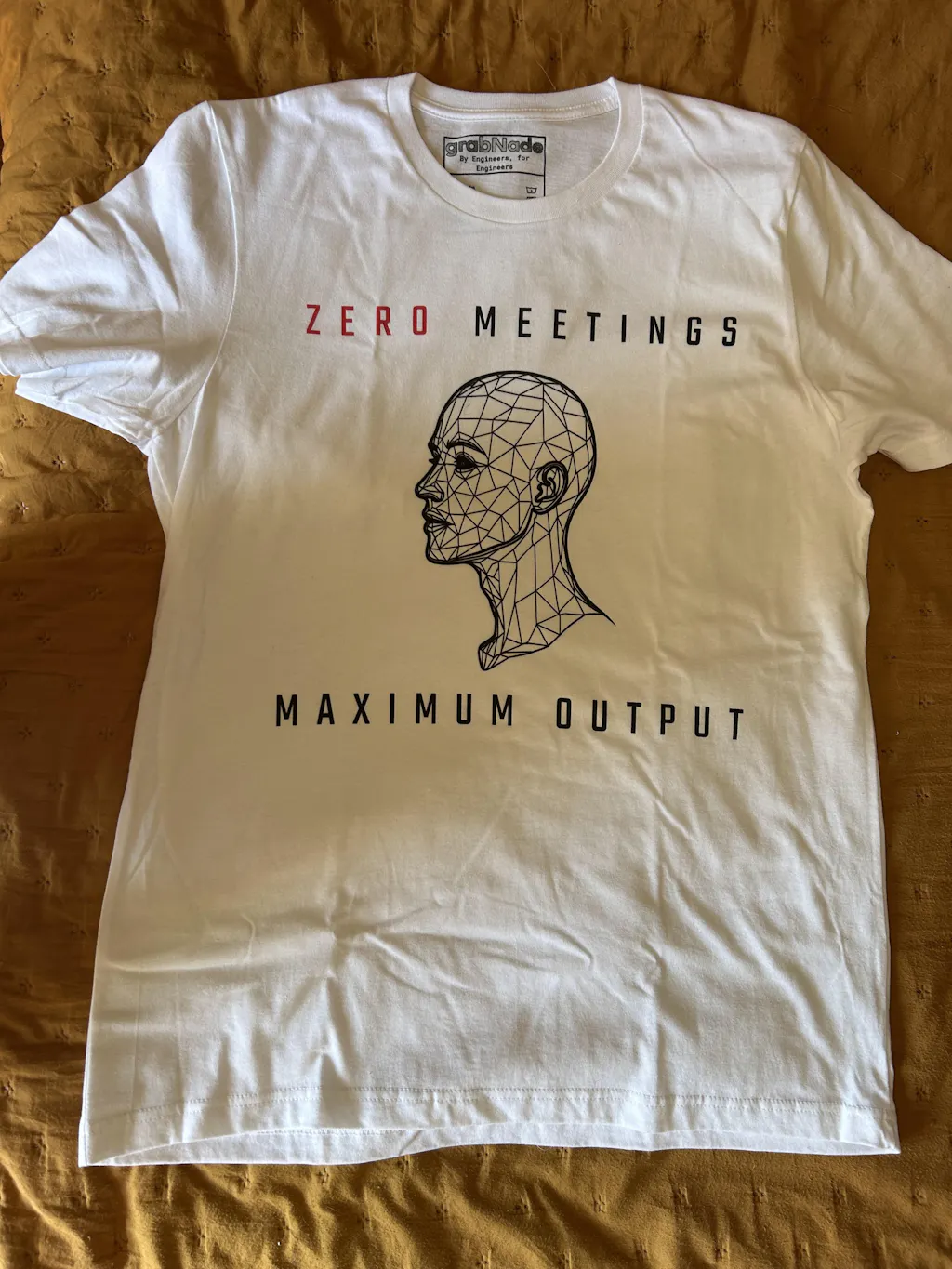
Varje grabNade-design går igenom samma grundläggande validering: känns detta rätt för någon som faktiskt har utfört jobbet? Inte "är detta smart", inte "kommer detta att sälja", inte "passar detta i kategorin". Känns det rätt. Det testet är bara möjligt att utföra om personen som utför det har den direkta erfarenheten att kalibrera det.
Femton år med maskiner och CAD – specialmaskiner, reglerade miljöer, medicinsk teknik, precisionstillverkning, felsökning på udda tider – är referensbiblioteket bakom varje design. Vokabulären kommer från jobbet. Humorn kommer från jobbet. Frustrationerna som hamnar i texten kommer från jobbet. Det är det enda sättet att tillverka ingenjörskläder som ingenjörer faktiskt vill bära.
Marknaden kommer att fortsätta producera fysikskämt och sarkasm-mallar. Det är okej. Glappet de lämnar är exakt det som grabNade byggdes för att fylla.
// grabnade.com · ingenjörskläder
Ingenjörskläder som äntligen godkänns.
Gjord av en ingenjör. 15 år med maskiner och CAD.Designad för de som faktiskt kan skillnaden.
Noll överproduktion. Ekologiska alternativ finns.
Och om du letar efter en present till en ingenjör som redan har sett alla fysikskämt på marknaden – här är stället att leta istället.