Sustainable Workwear That Holds Up on the Floor
Dela
A shirt is not sustainable because its hangtag says so. It is sustainable when it earns a long service life: repeated wear, repeated washing, and no early retirement because the collar warped, the print cracked, or the fabric turned into shop-rag material after six months. For engineers, machinists, and manufacturing people, sustainable workwear starts with the same question used on any decent design review: will it perform under actual use?
That standard rules out plenty of easy marketing. A low-impact fiber is useful, but it is only one variable. Garment weight, knit construction, stitching, print method, fit, wash behavior, and how often you realistically wear the thing all matter. The best choice depends on the job, the climate, and whether you need a clean overshirt for a customer visit or a dependable hoodie for a cold production floor.
Sustainable Workwear Is a Use-Case Problem
Workwear gets a vague label because people treat it as a material category. It is not. It is a use case. The clothes you wear while programming a CMM, setting up a mill, reviewing drawings, or chasing a CAPA through three departments need to survive a different reality than a fashion tee worn twice a year.
For most technical professionals, the most sustainable garment is often the one that stays in rotation. A well-made tee worn 80 times can beat a supposedly greener tee that loses shape after 12. That does not give manufacturers a pass on materials or labor. It does mean durability is not a side benefit. It is part of the environmental math.
There is also a safety boundary worth stating plainly: casual sustainable workwear is not PPE. If the job calls for flame-resistant clothing, high-visibility gear, arc-rated layers, chemical protection, or cut resistance, use equipment certified for that hazard. An organic cotton shirt can be a good everyday layer. It is not a substitute for a safety program.
Start With the Fiber, Then Check the Whole Build
Organic cotton is a sensible starting point for everyday engineering apparel. It avoids synthetic pesticide use in its cultivation and is familiar, breathable, and comfortable through long shifts. It also takes ink well, which matters if the design includes the kind of fine-line technical reference that should remain legible after laundry day.
But cotton is not automatically the correct answer. It can require significant water depending on where and how it is grown. It may also shrink, fade, or wear through sooner than a heavier blend if the garment construction is weak. “Organic” tells you something about the agricultural input. It does not tell you whether the finished shirt is substantial, fairly made, well cut, or built to last.
Recycled polyester has a legitimate role, especially in outer layers and garments where moisture management, insulation, or abrasion resistance matter. Reusing existing plastic feedstock is preferable to treating virgin petroleum as an unlimited raw material. The trade-off is microfiber shedding during washes and a garment that can be harder to recycle again at end of life.
Blends complicate the picture further. A small amount of synthetic fiber can improve shape retention and extend useful life. It can also make fiber separation more difficult later. There is no universal scorecard where 100% natural always wins. A heavy, durable cotton tee may make sense for daily casual wear. A recycled-poly fleece may make more sense for a drafty plant or a winter commute. Specify the problem before declaring the material.
Weight and Construction Are Not Fine Print
Fabric weight is not a durability guarantee, but it is a useful clue. A lightweight shirt can be excellent for hot environments and layering. It just should not be presented as indestructible. A heavier jersey typically offers more substance, better drape, and a longer runway against pinholes and distortion, though it may run warmer under a shop coat.
Look beyond the headline material. A stable collar rib, clean shoulder seams, reinforced high-stress stitching, and consistent sizing are boring details until they fail. Then they become the reason a garment is donated, trashed, or forgotten at the bottom of a drawer.
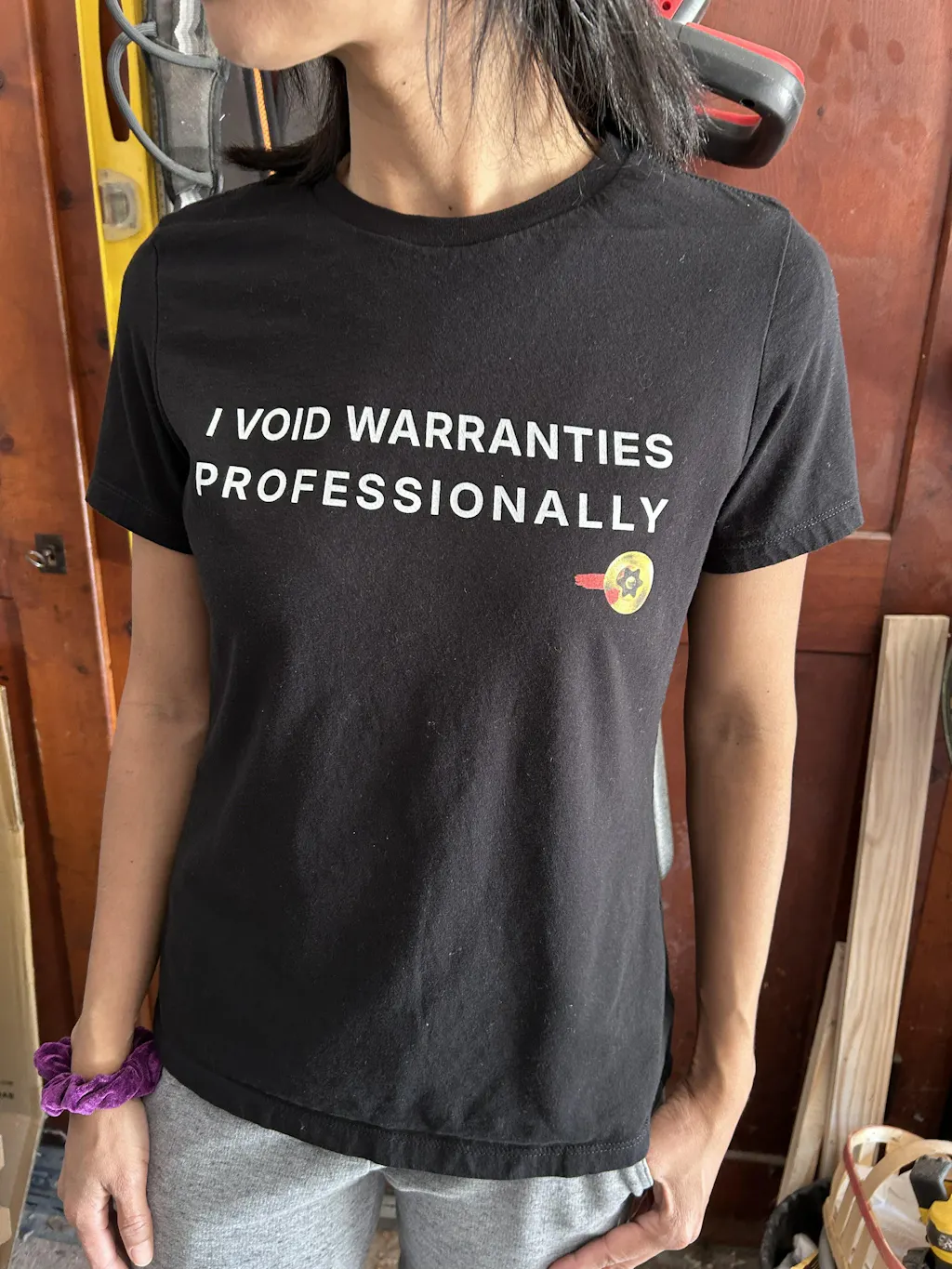
The same logic applies to graphics. A print that feels like a stiff plastic sheet or starts to fracture after a handful of washes is not a quality feature. Apparel with technical humor should be made with the same respect for tolerances as the reference itself. If the linework cannot survive normal use, the design was never finished.
Buy Fewer, Better-Fit Pieces
The fastest way to create clothing waste is to buy apparel that does not fit the way you work. A shirt that is too slim across the shoulders, too short when reaching for a fixture, or too bulky under a jacket will not become a favorite through positive thinking. It will become drawer inventory.
Before buying, check the garment measurements rather than relying only on size labels. Compare chest width and body length with a shirt or hoodie you already wear often. If you are between sizes, consider how you layer and move. A controls engineer who spends the day in a climate-controlled office may want a different fit than a machinist who needs room through the shoulders and frequently adds an outer layer.
Buying less does not mean buying the cheapest possible basic and calling it responsible. It means choosing a small rotation that covers real use. For many people, that is a few tees, a reliable sweatshirt or hoodie, and one layer that can move from the floor to a meeting without looking like it was pulled from a lost-and-found bin. The right number is not a capsule-wardrobe slogan. It is enough to reduce panic laundry without accumulating unworn extras.
For gifts, this matters even more. Profession-specific apparel has value when it recognizes actual work, not a generic gear icon pasted onto a blank. But the recipient still needs a wearable fit, a useful fabric weight, and a design they will reach for after the novelty wears off. Sustainable gifting is not about a moral lecture in the box. It is about avoiding the unused shirt.
Care Is Part of the Design Spec
A garment can be responsibly made and still have a short life if it is cared for like disposable laundry. The usual maintenance protocol is uncomplicated: wash cold, turn printed garments inside out, use a moderate cycle, and avoid excessive heat. Heat is hard on fibers, elastic recovery, and printed surfaces. It also consumes more energy than the label often gets credit for.
Drying is the main decision point. Air drying reduces energy use and is gentler on most garments, but it is not always practical in an apartment, a busy household, or a wet climate. A low-heat dryer setting is a reasonable compromise. Sustainability that only works for people with unlimited time and a dedicated laundry room is not a serious system.
Treat stains early instead of escalating to aggressive wash cycles. Keep sharp tools, rough work surfaces, and snag hazards in mind when you choose what to wear. If a seam opens or a minor hole develops, repair it before the damage spreads. A ten-minute fix can add a year or more of useful wear. That is a better root cause correction than buying the same failed item again.
Demand Evidence, Not Green Vibes
Sustainability claims should be treated like any other supplier claim: ask what supports them. Useful information includes fiber composition, fabric weight, country of manufacture, care guidance, relevant certifications, and a clear description of how the item is printed or decorated. None of this makes a product perfect. It does make the decision auditable.
Be cautious with broad terms such as “eco-friendly,” “conscious,” or “earth-safe” when nothing specific follows. Those words can describe an improvement, or they can describe a marketing meeting. A brand that tells you where it made a better choice, where trade-offs remain, and how to make the garment last is giving you something more useful than a green color palette.
At grabNade, that standard fits the product: designs should make sense to the people who have actually been there, and the garment underneath should be worth wearing long after the reference gets its first laugh.
The practical target is not perfection. It is fewer bad purchases, longer garment life, and better information at the point of choice. Pick workwear that matches the conditions, maintain it like equipment, and let the shirt earn its place in the rotation.
Organic and certified options
- Kaizen Safe Word hoodie: 80% organic cotton, 20% recycled polyester
- Never Trust A Blueprint hoodie: the eco raglan version
Browse more in Organic Engineer Apparel.