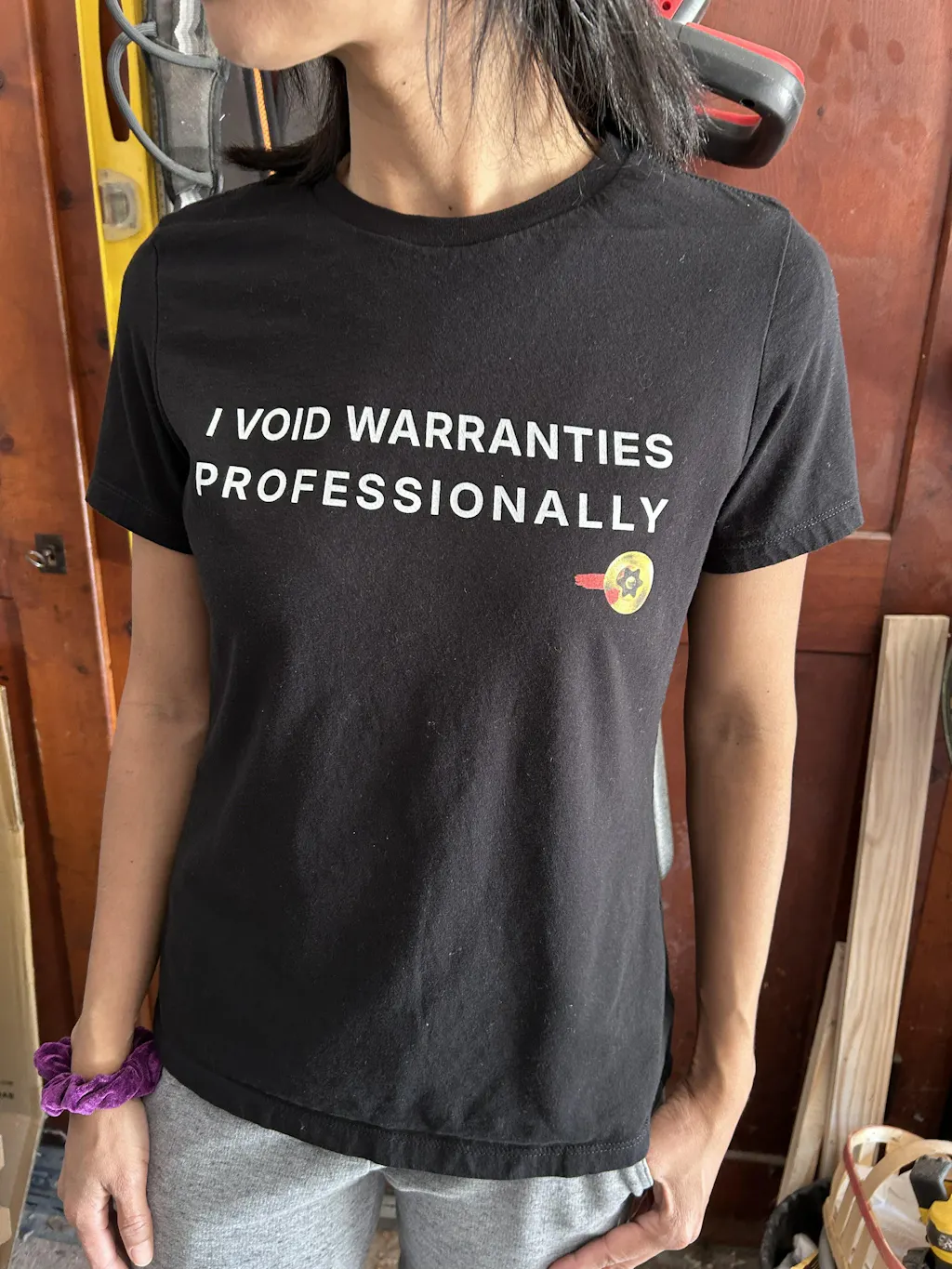
Organic Engineer Apparel: A Practical Buying Guide
A sustainability label alone doesn’t tell you whether a shirt belongs in your rotation. Choosing organic engineer apparel means checking the fabric and certification details, then deciding whether the cut, weight, and engineering graphic suit your day. Generic slogans rarely capture the work or discipline behind a design.
It makes sense to look beyond the word “organic.” Product pages can make fibre blends, certification scope, and fit difficult to compare. A T-shirt that works for a warm office may not suit a cold commute or long hours outdoors. Start with specific product details, not broad claims.
This guide explains what to check in material descriptions and sustainability labels, how to compare T-shirts and hoodies for work and everyday wear, and which fit details to review before choosing. It also covers engineering-specific designs, so you can find apparel that reflects your discipline without treating technical identity as generic decoration. Compare the specifications first, then choose the garment and design that suit how you work and live.
Key Takeaways
- Choose organic engineer apparel by checking each product’s fibre composition and certification scope, not by relying on a broad collection claim.
- Match the garment to your routine: a T-shirt is suited to lighter layering, while a hoodie adds warmth. Check the specific fabric and fit details before deciding.
- Use your engineering discipline, workplace references, and preferred humour style to find designs that feel relevant rather than generic.
- Organic materials don’t automatically make a garment durable or suitable as protective workwear. Check its construction and intended use against your needs.
- Before choosing, review the product page for current material, sizing, care, certification, and availability details.
What to Check Before Buying Organic Engineer Apparel
Organic engineer apparel pairs engineering-focused graphics with clothing described as made from organic materials. Treat those as separate specifications. A clever design doesn’t verify the fibre, and an organic-material claim doesn’t tell you whether the graphic reflects your discipline. Check both before deciding.
Start with the product page and read the full fibre composition, not just the headline. A blended garment may contain organic fibres alongside other materials, so don’t assume every fibre is organic. Look for certification information linked to the specific item, and check which products and supply-chain stages the documentation covers. A collection-level description alone may not confirm the status of every garment.
What does GOTS certification tell a clothing shopper?
GOTS certification indicates that a textile product and the supply-chain stages covered by its certification meet defined requirements. It doesn’t automatically certify every item in a collection. That distinction is worth checking. Find out what the claim applies to, and look for product-level details rather than inferring coverage from a general label. Certification provides a framework for checking standards, not a blanket guarantee about environmental impact, health outcomes, or every ethical aspect of production.
For context, sustainable fashion covers more than organic fibre alone. Keep the material claim specific, and assess other product details separately.
How do engineering designs differ from generic apparel?
Good engineering graphics draw on details that people in a discipline recognize. A machining reference might nod to tools or tolerances; a quality-engineering design could play on inspection or process control. Programming humour may turn on code or debugging, while mechanical engineering references might draw on components, motion, or system behaviour. These signals can express professional identity and peer understanding without dressing up a basic slogan in technical jargon.
Design relevance is personal. Consider whether you want a subtle workplace reference, a discipline-specific visual, or humour that makes sense beyond your team. The brand’s engineering background informs its technical designs, but the right choice is the one that fits your taste and how you’ll wear it.
For a more detailed buying framework, look for a guide to engineer apparel and technical specs. Then compare the design with the garment’s composition and certification details. One tells you whether it feels like your field; the other tells you what you’re buying.
Compare Organic Engineer T-Shirts and Hoodies by Material and Use
Choose a garment to suit your routine, then verify the specifications for that item. A T-shirt is generally easier to wear in warmer settings or layer under another garment. A hoodie adds warmth for cooler commutes, offices, or downtime. Neither garment type, by itself, confirms organic certification or suitability as protective workwear.
Garment type determines how you’ll wear it; product-level material and certification details tell you what it’s made from. Use this comparison to guide what you check on each product page.
| Garment type | Likely use | Material details to verify | Fit details to verify |
|---|---|---|---|
| Engineering T-shirt | Everyday wear, warmer settings, or layering | Full fibre composition, organic-fibre claim, and any product-specific certification information | Size chart, intended fit, and care instructions |
| Engineering hoodie | Added warmth and a more substantial layer | Fibre blend, fabric weight, and any stated lining or construction details | Size chart, sleeve and body fit, and room for layers |
When is an organic engineering T-shirt the better choice?
Choose a T-shirt for a lighter option in daily wear, a warmer workplace, or as a layer beneath a shirt or jacket. Before buying, compare the stated fibre composition and size chart, then read the care instructions. “Organic” describes a material claim, not a guarantee of a particular fit, lifespan, or protective performance. A graphic or general collection description won’t establish those details.
What should you compare in an organic engineering hoodie?
Fabric weight and blend help you understand how a hoodie is designed to feel, but confirm both on the exact item. Supplied descriptions for several listed hoodie styles report a weight of 280 GSM and a blend of 80% organic cotton and 20% recycled polyester. Those specifications don’t automatically apply to every hoodie. Check each product page, and count features such as brushed lining, raglan sleeves, or a lined hood only when they’re specifically stated.
The USDA’s USDA organic agricultural standards provide context for organic claims in agriculture, but don’t treat that resource as proof of a textile’s certification. Check the apparel product’s own documentation. For a closer look at hoodie construction, consult a related guide to engineering hoodies and garment details. You can also compare the available organic engineering apparel against these material and fit checks.
Match Organic Engineer Apparel to Your Discipline and Design Taste
The best design feels specific to your work, not like a generic slogan with a technical term dropped in. Start with three filters: your discipline, the references you recognize from day-to-day work, and how direct or dry you like your humour. This narrows the options without pretending one design suits every engineer.
Keep the graphic and the garment’s material claim in separate columns in your mental spec sheet. A discipline-specific joke doesn’t verify the fibre or certification. For that, check the item’s product information and, where a GOTS claim is made, consult the Global Organic Textile Standard (GOTS) for information about its standard and certification framework.
Which engineering hoodie designs reflect your day-to-day work?
For construction-site humour, Never Trust A Blueprint | Engineer Eco Raglan Hoodie turns a familiar workplace reference into a punchline. Debugging FEA | Mechanical Engineer Eco Raglan Hoodie speaks more directly to mechanical engineering, pairing debugging language with the FEA reference. For programming-related humour, Error 404 Common Sense | Programmer Eco Raglan Hoodie draws on a recognizable error-message format.
Choose the reference that matches your work, or the kind of technical humour you’d wear beyond it. The titles identify the design themes. Check each product page for current specifications rather than assuming all hoodies share the same materials or details.
How can manufacturing and quality engineers narrow the options?
Manufacturing-minded shoppers can consider Optimize Toolpaths | CNC Machinist Eco Raglan Hoodie for its toolpath-themed design. Quality Over Penalties | Quality Engineer Eco Raglan Hoodie states its quality message plainly. Compare each graphic with your preferred humour style: process-focused, discipline-specific, or more direct.
Use a sustainable engineer apparel framework to weigh design preference alongside material verification, fit, and intended use. That way, a strong graphic doesn’t become the only specification you assess.
Shortlist by discipline, then choose the reference and humour you’d genuinely enjoy wearing. To see organic engineer apparel examples together, browse organic engineer apparel and check each product page before deciding.
Avoid These Common Mistakes When Choosing Organic Engineering Clothing
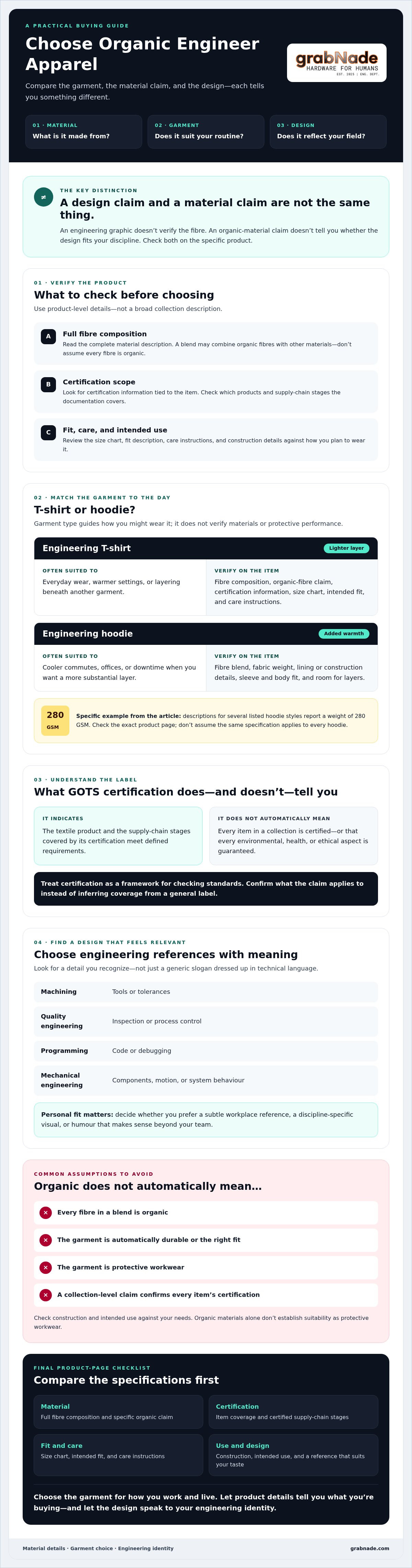
A broad label can make a product sound simpler than it is. A claim attached to a collection doesn’t prove every item has the same fibre composition, certification coverage, or construction. Check the individual garment’s product page and supporting details. If the claim doesn’t identify which product it covers, treat that as something to verify rather than assume.
An organic fibre claim describes material, not a garment’s durability, fit, or protective performance. Check those separately. Organic engineer apparel still needs to meet your practical requirements for everyday wear, layering, and care.
Does organic automatically mean more durable?
No. Durability depends on more than fibre choice. Construction, how you use the garment, and how you care for it also matter. Fabric weight, including GSM, is one specification, not a standalone durability guarantee. A heavier fabric isn’t automatically tougher or longer-lasting in every use.
Compare like with like: T-shirts against T-shirts and hoodies against hoodies. Review the stated fabric and construction details, fit guidance, and washing instructions. If a detail isn’t provided, don’t fill the gap with an assumption. Check the current product information before buying, since specifications can differ between items.
How can shoppers avoid misleading sustainability assumptions?
Separate what’s stated from what’s implied. A product may list an organic fibre blend, while a separate certification claim applies only to specified products or parts of the supply chain. Look for documentation that identifies the certified product and explains the scope. Don’t assume a collection-level statement confirms every garment’s status.
Use this quick verification pass:
- Fibre composition: Check the percentages and identify any non-organic fibres in a blend.
- Certification: Confirm whether the claim is product-specific and which supply-chain stages it covers.
- Performance: Look for garment-specific evidence of durability or workplace protection. An organic claim alone establishes neither.
- Fit and care: Read the size guidance and washing instructions to see whether the garment suits your routine.
Be cautious with broad environmental language that isn’t backed by specific, verifiable information. A precise material description is more useful than a sweeping promise. Apply the same standard to collection-wide claims: note what they say, then verify whether they apply to the item you’re considering.
Ready to compare product details against these checks? Browse the organic engineering apparel and review each item’s current specifications before choosing.
Use This Final Checklist to Choose Organic Engineer Apparel
Run one last check before buying. Whether you’re choosing for yourself or selecting a gift for an engineer, follow the same sequence: garment, material, fit, design, and care. Then confirm the product page still shows the details you relied on, including certification scope and stock.
What should you confirm before adding an item to your cart?
- Choose the garment. Decide whether a T-shirt or hoodie better suits the intended wearer’s routine, climate, and layering habits.
- Verify the material. Read the specific item’s full fibre composition. If it makes a certification claim, check which product and supply-chain stages the supporting information covers.
- Check the fit. Compare the size chart with a similar garment that already fits well. For a gift, check the recipient’s preferred fit or measurements rather than guessing from a general size label.
- Match the design. Look for a discipline reference the wearer will recognize, and make sure the humour suits their taste and where they’ll wear it.
- Review care and construction. Read the washing instructions and check any stated construction details. Make sure the care routine and features suit the intended use.
This sequence keeps the decision grounded. A design may suit the recipient while the size, fabric blend, or care requirements don’t. For a gift, prioritize details you can verify, and don’t assume an item shares specifications with another garment in the same collection.
How do you browse the collection efficiently?
Shortlist in three passes. First, choose a T-shirt or hoodie. Next, narrow the options by discipline or workplace reference. Finally, decide whether you prefer understated technical humour or a more direct punchline. Then compare individual product pages rather than treating a shared collection description as proof that every item has the same fabric, construction, or certification.
Before checkout, revisit the product page and confirm the current composition, fit guidance, care instructions, certification information, and stock. That final check matters for gifts as well as personal purchases. Product details can vary, so make sure the item that caught your eye also passes the specification check.
With those checks complete, you can choose organic engineer apparel based on the wearer, the garment, and the actual product details rather than assumptions. Explore the organic engineering apparel collection and use this checklist to compare the available options.
Choose Your Next Engineer-Informed Layer
Choosing organic engineer apparel comes down to three checks: match the T-shirt or hoodie to how you’ll wear it, verify the fabric and certification details for that specific item, and pick a design that reflects your discipline and taste. Don’t let an organic claim stand in for information about fit, care, durability, or workplace protection.
Engineering experience informs the designs and gives their technical references an insider perspective. Product descriptions may state that organic engineer T-shirts and hoodies have GOTS certification, but certification scope can vary. Check the product page to confirm which item the claim covers, along with its current composition, sizing, care details, and stock.
Ready to compare the options against your checklist? Browse the organic engineering apparel collection. Check the specifications, then choose a garment and design you’ll feel good wearing.
Frequently Asked Questions
What does GOTS-certified organic apparel mean?
GOTS-certified organic apparel has a certification claim tied to a defined textile standard and documented scope. That scope may cover particular products and supply-chain stages, so don’t assume one collection label confirms every item is certified. Check the product page or supporting documentation to see which garment the claim applies to and which stages are covered. Certification is evidence of compliance with defined requirements, not a guarantee of every environmental, health, or ethical outcome.
Is organic engineer apparel durable enough for everyday wear?
Organic engineer apparel can suit everyday wear, but an organic fibre claim alone doesn’t prove how long a garment will last. Durability also depends on construction, frequency and type of use, and care. Check product-specific fabric and construction details, then follow the washing instructions. Fabric weight can help you compare garments, but it isn’t a standalone durability guarantee. For work involving hazards, don’t treat everyday clothing as protective equipment without explicit product evidence.
How do I choose between an organic engineer T-shirt and hoodie?
Choose a T-shirt for a lighter layer, warmer settings, or wearing beneath another garment. Choose a hoodie for added warmth and a more substantial layer. Then compare the specific item’s fibre composition, fit guidance, size chart, and care instructions. Don’t assume T-shirts and hoodies share the same fabric blend or certification. Let your routine, climate, and preferred fit guide the choice.
Can I wear engineering-themed organic apparel at work?
Often, yes, if the garment and graphic suit your workplace’s dress expectations. A discipline-specific reference can feel more personal than a generic slogan, but consider the setting, audience, and preferred level of humour. Check any workplace clothing requirements before wearing it on site. Organic materials and engineering graphics don’t establish protective performance, so use clothing approved for the task if your work requires protective equipment.
What should I check before buying an organic engineering hoodie?
Read the individual hoodie’s fibre composition, certification details, fabric weight, construction features, size chart, and care instructions. Some supplied hoodie descriptions list 280 GSM fabric and an 80% organic cotton, 20% recycled polyester blend, but those specifications don’t automatically apply to every hoodie. Confirm current details on the product page, including whether any claimed certification covers that specific item and whether it’s in stock.
Are all products in an organic apparel collection made from the same materials?
No. Fibre blends, fabric weight, construction, and certification can differ between products in the same collection. Check each item’s product page rather than applying one garment’s specifications to another. Read the full composition, including any non-organic fibres, and verify the certification claim’s product scope. If a detail isn’t stated, don’t infer it from the collection name or from a similar-looking T-shirt or hoodie.
How should I care for organic cotton engineer apparel?
Follow the care label on the specific garment, especially if it contains a fibre blend or has printed graphics. Check the recommended washing method, temperature, drying instructions, and any guidance for preserving the print. Don’t assume every item can be cared for identically just because it contains organic cotton. The product’s composition and construction matter, so use its instructions as your reference for routine washing and drying.