How to Identify Quality Apparel Before You Buy
Teilen
A shirt can feel fine for the first ten minutes and still fail the first wash. That is the problem with judging apparel by the product photo, a soft hand feel, or a big claim on the hangtag. Knowing how to identify quality apparel means looking at the inputs and the execution: fiber, fabric weight, stitching, fit, print method, and whether the maker gives you anything more useful than marketing language.
For engineers, this is familiar territory. You would not approve a part based on a flattering render and the phrase “premium performance.” You would ask for material specs, tolerances, process controls, and failure data. Clothing deserves the same basic discipline, especially when it is meant to survive shop days, office days, laundry cycles, and the occasional coolant-adjacent incident.
Start With the Fabric Specification
Fabric is not just a percentage on a label. Fiber type, yarn quality, knit structure, and garment weight all affect how a shirt feels, drapes, shrinks, pills, fades, and holds a print.
A 100% cotton shirt is not automatically better than a blend. Ring-spun, combed cotton generally uses smoother, more refined fibers than basic open-end cotton, giving the fabric a softer surface and a cleaner print area. That can matter for a graphic tee with fine lines, small type, or an inside-reference design that should remain readable after repeated washes.
Weight is useful, but it is not a universal quality score. A lightweight tee may be exactly right for hot production floors or layered office wear. A heavier tee can feel more substantial and often resists becoming transparent, but it may run warmer and dry more slowly. For everyday tees, a clearly stated fabric weight gives you more confidence than vague terms like “luxury cotton.” If the brand publishes ounces per square yard or GSM, it is at least speaking in a language that can be checked.
Blends also have legitimate jobs. Polyester can improve durability, moisture handling, and shape retention. A small amount of elastane can add recovery where stretch is needed. The trade-off is that some blends can retain odor, show heat damage more easily, or feel less breathable than cotton. The right answer depends on use case, not ideology.
Look Beyond the Fiber Percentage
Two shirts can both claim 100% cotton and perform very differently. Inspect the fabric surface in person when possible. Hold it toward light. A little light transmission is normal in a lightweight shirt; wildly uneven density is not. Look for thin spots, irregular slubs that do not appear intentional, and a surface already covered in loose fuzz.
Rub the fabric between your fingers. Cheap fabric often feels deceptively soft because it has been aggressively brushed or treated. That softness may disappear quickly, leaving a thin, rough shirt behind. Better fabric usually feels consistent rather than artificially slick.
Check Construction Like It Is a Small Assembly
A garment is a sewn assembly. Its seams carry load, its collar sees repetitive stress, and its shape depends on consistent cutting and stitching. A good-looking graphic cannot compensate for poor construction.
Start at the collar. On a quality tee, the rib should lie flat and return to shape after a gentle stretch. It should not look wavy, twisted, or under-tensioned before it has even been worn. A taped shoulder seam is another good sign. This strip of fabric helps stabilize the shoulder area and reduces stretching over time.
Then inspect the stitches. They do not need to be microscopic, but they should be even, secure, and free from skipped sections. Pull gently at a side seam and the hem. If you can see the seam opening or hear threads popping, the process has already told you what it thinks of service life.
Pay attention to alignment. Side seams should sit where side seams belong. Graphics should be centered relative to the garment, not merely centered relative to a crooked collar. Sleeves should be comparable in length and angle. These are basic checks, but they reveal whether the operation had meaningful quality control or just enough inspection to catch disasters.
Here are five failure points worth checking before you remove a tag:
- Collar rib that waves, rolls, or feels stretched at purchase
- Uneven stitches, loose thread chains, or skipped seam sections
- Side seams that twist forward or backward when the shirt lies flat
- Hems that look roped, puckered, or noticeably uneven
- A print that is off-center, cracked, sticky, or misregistered
Evaluate the Print, Not Just the Artwork
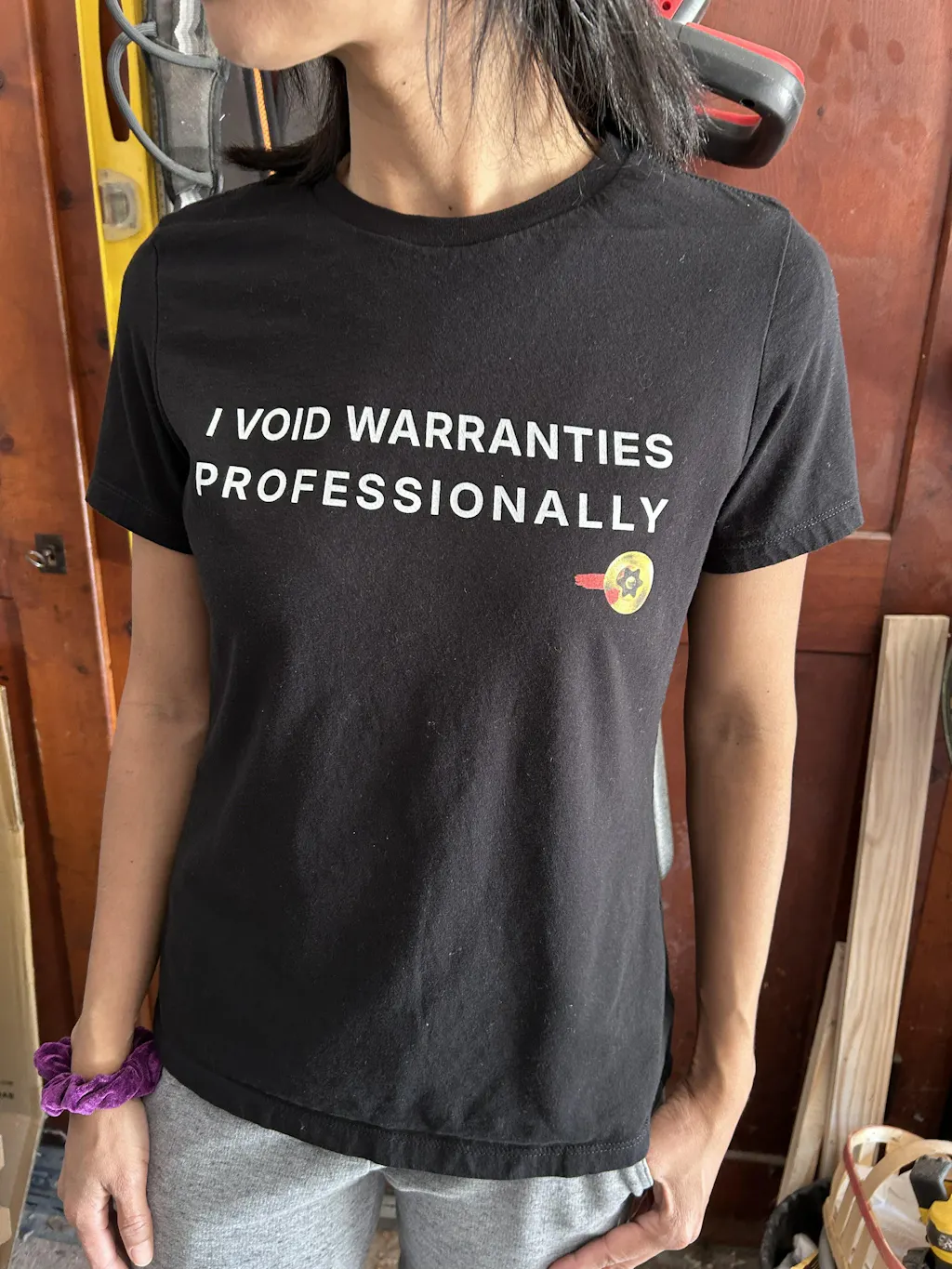
For profession-specific apparel, the design is part of the product specification. If the joke relies on CAPA terminology, a surface finish callout, or the kind of phrase that only makes sense after a long day in CAD, the print needs to stay sharp enough to be read.
Screen printing is often a strong choice for bold, durable graphics, especially when it is properly cured. A quality screen print should feel integrated with the fabric, not like a thick plastic plate bolted to the chest. Some heavier ink deposits are intentional, particularly with bright colors on dark garments, but excessive stiffness can reduce breathability and encourage cracking at high-flex areas.
Direct-to-garment printing can handle detailed artwork and gradients well, but results depend heavily on garment preparation, pretreatment, ink quality, and curing. Look closely at fine text and line work. Edges should be clean, colors should not bleed, and the print should not have a chalky or patchy appearance.
Do not confuse a soft print with a durable one, or a thick print with a premium one. The relevant question is whether the method suits the artwork and fabric. A large, dense front graphic needs a process that can survive repeated flexing. Fine technical linework needs resolution. Good apparel makers select the process based on the design instead of forcing every file through the same machine.
Fit Is a Performance Requirement
A shirt that survives 50 washes but fits like a mislabeled fixture is not quality apparel for you. Fit is personal, but consistency is measurable.
Check the size chart rather than assuming your usual size will transfer across brands. Chest width, body length, sleeve length, and shoulder construction can change the outcome significantly. A relaxed fit should be intentionally relaxed, not simply oversized because the grading was sloppy. A fitted shirt should allow normal movement without pulling across the chest or climbing up when you reach for a top shelf.
For work and off-hours wear, consider where the garment will be used. A shorter, lighter tee may be useful under a hoodie or shop coat. A heavier shirt with a more structured collar may hold its shape better for customer-facing days. Women’s fits deserve the same scrutiny: look for stated measurements and intentional shaping, not a generic blank with a smaller size label.
The best signal is repeatability. If you can buy the same style in two colors and get the same fit, the brand likely has better control over its blanks, cut-and-sew process, or both.
Read Care Instructions as Failure Prevention
Care labels are not fine print designed to annoy you. They are operating instructions. Ignoring them is like running an unverified revision because the file name looked familiar.
Cotton can shrink, especially if it is not pre-shrunk. Heat can damage prints, weaken elastic fibers, and accelerate fading. Turning graphic garments inside out, washing in cold water, and avoiding high dryer heat usually extends print life and reduces fabric wear. That does not mean quality apparel should be fragile. It means material behavior still applies.
Also check whether a brand explains its garments clearly. Transparent details on fabric composition, weight, fit, printing, care, and production standards are useful because they make the purchase testable. At grabNade, that technical mindset is the point: clothing should carry credible specs, not just a clever line aimed at people who own a calculator.
Price Is Data, Not Proof
A high price can reflect better materials, smaller production runs, domestic labor, more demanding print work, or simply a larger marketing budget. A low price can be a good value during a sale, or it can indicate thin fabric, rushed construction, and a garment designed for a short service interval.
Use price as one input. If a shirt costs more, ask what changed: heavier fabric, better fiber, reinforced construction, specialized printing, organic certification, or documented manufacturing standards. If the answer is just “elevated,” keep your money in the tool budget.
Quality is not about buying the heaviest shirt or the most expensive hoodie. It is about selecting apparel whose material, construction, fit, and graphic treatment match the job it will perform. Look for the specifications, inspect the assembly, and give the garment enough wash cycles to prove its claims. The shirt that still fits, reads clearly, and does not twist into a helix after a season has earned its place in the rotation.