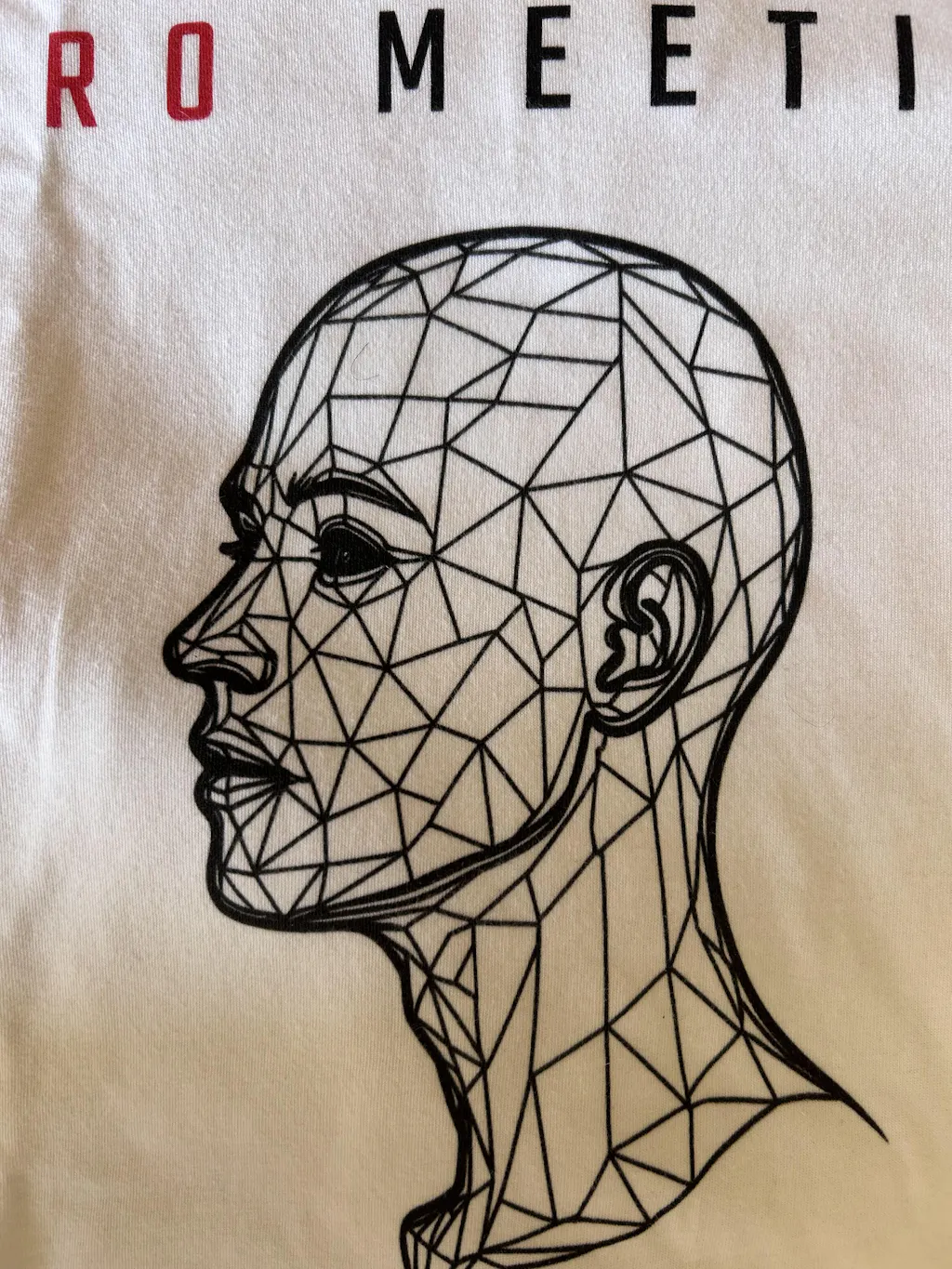
Biomedical Engineer Apparel: The 2026 Guide to Lab-Grade Gear
A caduceus slapped across a generic circuit board isn't biomedical engineering. Yet most off-the-rack biomedical engineer apparel still relies on lazy medical puns, scratchy fabrics, and boxy unisex silhouettes that fit nobody well. You know the cycle firsthand. You wear a shirt between CAD workstations, dry labs, and team meetings, run it through routine wash cycles, and watch the collar warp, the side seams torque, and the cheap graphic peel away.
You shouldn't have to settle for novelty throwaways that fail to respect the complexity of your discipline. Whether you are validating sensors, modeling tissue mechanics, or analyzing signals, your everyday gear should match that level of precision. In this guide, you'll discover how to evaluate and select technical apparel and gifts built for biomedical engineers. We break down the essential fabric weights, breathability specs, and tailored fits required to secure durable gear that actually belongs in your rotation.
Key Takeaways
- Filter out cliché medical clipart in favor of designs reflecting genuine tissue mechanics, fluid dynamics, and neural instrumentation.
- Evaluate biomedical engineer apparel by analyzing fabric weight, tensile yarn strength, and thermal breathability for desk-to-lab transitions.
- Build a functional wardrobe using heavy-duty engineering hoodies, daily tees, organic apparel, and dedicated women's silhouettes.
- Use a five-step evaluation framework to match specialized engineering gifts directly to a professional's specific sub-discipline.
- Discover why gear engineered by technical peers delivers superior structural integrity compared to generic, mass-market alternatives.
The Anatomy of Authentic Biomedical Engineer Apparel
Biomedical engineering does not belong in a clinical pigeonhole. The discipline sits squarely at the convergence of mechanical dynamics, embedded instrumentation, and cellular physiology. Authentic biomedical engineer apparel reflects that technical reality. It is purpose-built workwear engineered for professional credibility and day-to-day resilience. When your daily routine alternates between debugging microcontroller signals, running finite element simulations, and analyzing biomaterial wear profiles, you need apparel with long-term structural integrity rather than disposable novelty prints.
The Problem with Mainstream Medical and Science Novelty Merch
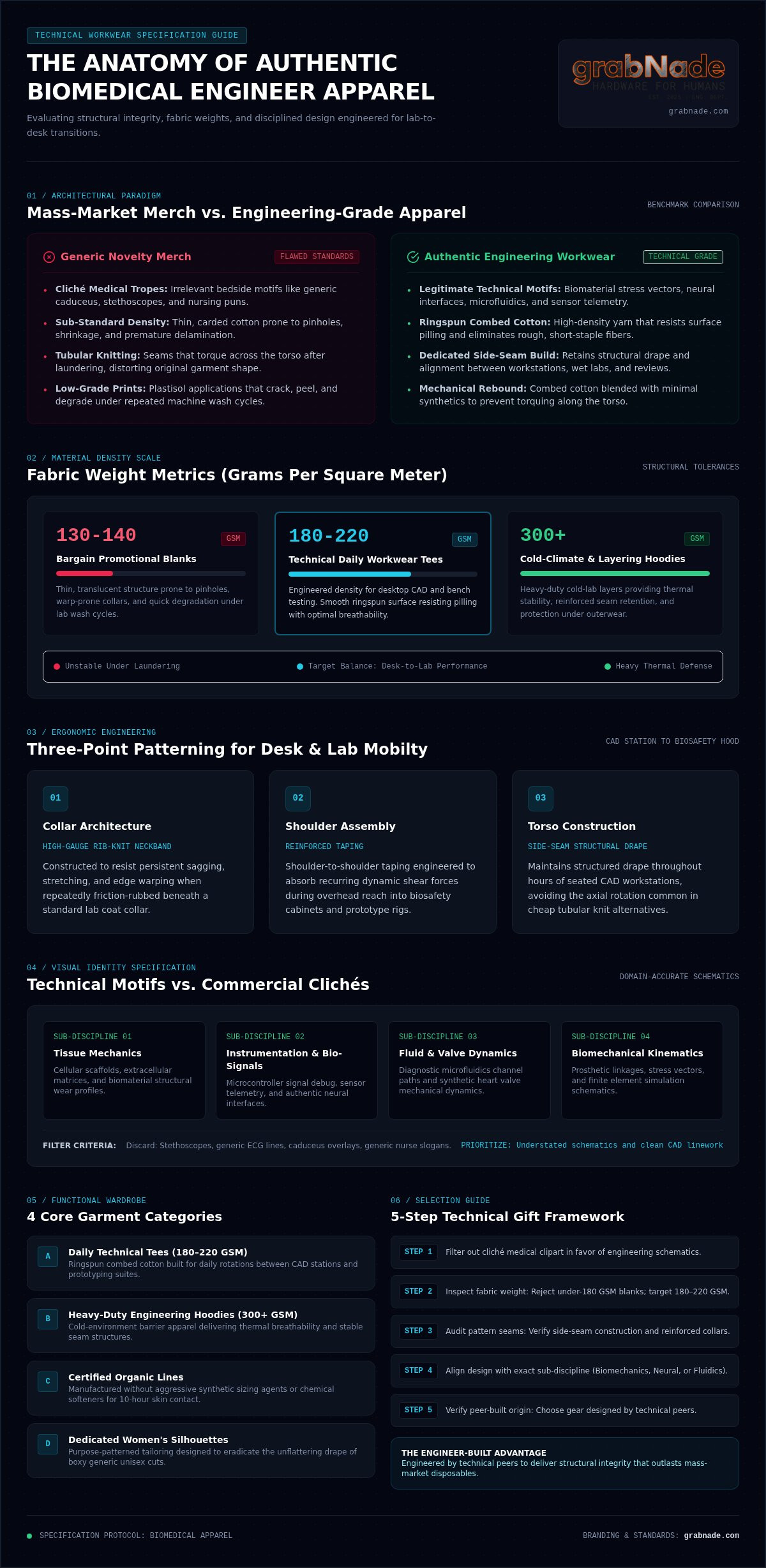
Most commercial platforms lump biomedical engineers into generic healthcare categories. They slap stethoscopes, generic electrocardiogram lines, and nursing puns onto bargain-bin blanks. That approach completely misses the objective. Engineers who design prosthetic linkages, synthetic heart valves, or diagnostic microfluidics do not relate to bedside clinical tropes. Worse yet, the physical quality fails under real-world use. Thin, carded cotton shrinks unpredictably. Low-grade plastisol prints crack and delaminate after minimal laundering. Side seams torque across your torso, turning a work shirt into unwearable scrap within a month.
Defining the Modern Biomedical Engineering Identity
To design better garments, you have to understand the daily environment of the professional. In defining what is biomedical engineering, researchers and practitioners combine engineering problem-solving with biological sciences to build functional, life-saving hardware. The modern engineer's uniform should mirror that technical precision. Authentic visual motifs highlight legitimate industry concepts: cellular tissue scaffolds, biomechanical stress vectors, neural interfaces, and sensor telemetry.
Understated schematics replace cartoonish clipart. Clean lines replace clutter. This disciplined design philosophy ensures a natural transition across varied environments: from bench testing and CAD workstations to cross-functional design reviews and academic departments.
Technical Evaluation Criteria: What Makes Great Engineering Workwear?
Evaluating apparel requires the exact same analytical rigor you apply to mechanical assemblies. You check load paths, thermal limits, and material fatigue. Apparel warrants the same scrutiny. Instead of settling for flimsy promotional blanks, serious biomedical engineer apparel demands durable fabric weights, stable seam construction, and balanced thermal regulation. You can explore how fabric construction informs longevity in the engineer’s uniform to see how structural tolerances dictate daily performance.
Material Specs: GSM, Fiber Composition, and Handfeel
Grams per square meter (GSM) defines fabric density. Cheap promotional tees sit around 130 to 140 GSM; they are translucent, prone to pinholes, and quickly lose their shape. Technical daily workwear targets 180 to 220 GSM for t-shirts and 300+ GSM for cold-climate layers. Ringspun combed cotton eliminates rough, short-staple fibers, resulting in a smooth surface that resists surface pilling under repeated wash cycles. Blending tightly spun cotton with minimal synthetic fibers adds mechanical rebound, preventing the garment from twisting along the torso.
Ergonomics and Movement: Lab Benches to CAD Stations
Workplace mobility demands proper patterning. Engineers spend hours reaching into biosafety cabinets, bending over prototyping rigs, or analyzing data at a desk. Apparel must flex without binding.
- Shoulder assemblies: Reinforced shoulder-to-shoulder taping handles dynamic strain during overhead reach.
- Torso construction: Side-seam builds retain their architectural drape, unlike cheaper tubular knits that twist off-center.
- Collar architecture: High-gauge rib-knit neckbands resist warping and sagging under the collar of a standard lab coat.
While personal protective gear must satisfy strict workplace safety rules such as OSHA PPE Guidelines, your base layers handle climate control, ergonomic flexibility, and everyday comfort under that protective gear.
Sustainability and Chemical Purity in Apparel Manufacturing
Clean processing matters when apparel sits against your skin during 10-hour cycles. Certified organic cotton lines eliminate aggressive synthetic sizing agents and harsh chemical softeners. In addition, prioritizing high-density textiles cuts down on the microplastic shedding and disposable churn common to bargain garments. If you want apparel built to rigorous mechanical standards, check out grabNade for engineered garments that survive demanding schedules.
Top Biomedical Engineer Apparel Categories for 2026
A functional engineering wardrobe must operate across fluctuating thermal environments. A typical workday moves between high-airflow cleanrooms, climate-controlled computational labs, and warm desk workstations. Rather than relying on a mismatched collection of promotional freebies, building a modular wardrobe around dedicated biomedical engineer apparel categories ensures consistent comfort, long service life, and professional alignment.
Core Engineering T-Shirts: Everyday Precision and Comfort
Engineering t-shirts form your operational foundation. Crewneck cuts featuring subtle biomechanical schematics, signal filtration diagrams, and tissue-matrix layouts signal discipline fluency without loud branding. The knit architecture needs balanced air permeability to sustain thermoregulation during long modeling or benchtop assembly sprints. Premium reactive dye lots protect baseline pigments, ensuring blacks and navies stay crisp across repeated washing cycles without fading to chalky grey.
Engineering Hoodies: Midweight to Heavyweight Thermal Defense
Overcooled server rooms and high-air-exchange facilities quickly induce thermal fatigue. Midweight to heavyweight fleece cuts that chill instantly. Essential features include double-layer hoods that retain their structure, ribbed side-gussets for dynamic mobility, and elasticated cuffs that hold at the forearm without slacking. You can evaluate dense fleece construction specs through our guide to engineering hoodies.
Women’s Engineering T-Shirts: Engineered Fit and Proportions
Standard unisex sizing often results in excessive torso volume, dropping shoulder seams past the clavicle and creating bunching beneath lab coats. Women's engineering t-shirts fix this pattern deficiency:
- Proportional sleeves: Scaled biceps prevent loose fabric snagging around precision testing instruments.
- Contoured torso panels: Tailored side shaping eliminates bulk when tucked or layered under workwear.
- High-tensile seam stitching: Reinforced needlework maintains structural integrity during active laboratory tasks.
Everyday Lab Essentials: Engineering Mugs and Accessories
Identity extends beyond wearable layers to workstation tooling. Engineering mugs made from high-density ceramic handle rapid boiling water exposure across extended shifts without cracking. Sublimated schematics resist harsh commercial dishwasher cycles, providing clean aesthetics that look at home next to dual-monitor CAD rigs, cleanroom airlocks, or academic research desks.
Buying Guide: Selecting Gifts for Biomedical Engineers
Selecting gifts for technical professionals requires a systematic evaluation framework. Engineers spot lazy design immediately. A shirt featuring a broken ECG wave or a stethoscope icon ends up as an oil rag in the garage. Choosing biomedical engineer apparel that commands respect involves four deliberate steps:
- Isolate the sub-discipline: Map graphics directly to their daily focus, whether that means finite element models, neural prosthetics, or biomaterial scaffolds.
- Select foundational color palettes: Black, charcoal heather, and deep navy blend effortlessly into research benches, academic lectures, and clinical client walkthroughs.
- Rely on flat-measurement dimensions: Ignore vague "Small, Medium, Large" labels. Compare garment width and length specs against a proven shirt in their current wardrobe.
- Prioritize structural yarn integrity: Choose dense, combed cotton and reinforced hems over oversized, single-season novelty prints.
Matching Apparel to Career Milestones and Specializations
Biomedical engineering covers drastically different operating environments. A researcher formulating biodegradable polymers operates under different physical constraints than a field engineer servicing robotic surgery consoles. Match the garment to their current workflow:
- Academic Graduations: Celebrate the transition from coursework to industry with baseline engineering t-shirts that reflect professional engineering status.
- Instrumentation and Neural Teams: Look for schematics referencing Fourier transforms, sensor telemetry, and microfluidic channels.
- Device Specialists: Equip them with durable, abrasion-resistant midweight layers that transition smoothly from clinical testing suites to desk reports.
Sizing Protocols and Fit Verification
Sizing charts fail when they rely purely on height and weight estimates. Take an existing, well-fitting t-shirt or hoodie, lay it flat on a table, and measure two primary vectors: across the chest from armpit to armpit, and down the spine from collar seam to hem. Compare these dimensions directly against the manufacturer's technical sizing spec.
When selecting gifts, favor regular-fit cuts with proper shoulder-point drop over slim, restrictive silhouettes. Pre-shrunk fabrics are mandatory; without them, the first heated laundry cycle turns a dialed-in fit into an unusable remnant.
Ready to upgrade their wardrobe with gear that respects their discipline? Explore grabNade's technical engineering apparel to find purpose-built shirts, hoodies, and accessories designed by engineers who know the trade.
Why grabNade Builds Apparel for Engineers, by Engineers
Generic mass-market apparel treats technical professionals as an afterthought. Dropship algorithms scrape trending keywords, pair random clip art with worn-out puns, and stamp the result onto the cheapest blanks available. grabNade formed to break that cycle. Founded and operated by professionals with genuine engineering backgrounds, the brand replaces cheesy novelty prints with apparel developed by people who know the trade firsthand. Every concept celebrates the rigorous problem-solving mindset driving biomedical and technological progress. You can explore the latest additions across our specialized engineering t-shirts to see that distinction in practice.
The Insider Advantage: Design Authenticity Without Cliches
Authentic engineering culture relies on shared technical fluency. True peers do not put nursing stethoscopes on biomedical gear. Instead, designs draw directly from real-world schematics, instrumentation protocols, and biomechanical principles. The goal is understated credibility: graphics that spark quiet nods from colleagues in your lab rather than puzzled glances. By honoring the exact intersection of mechanical dynamics, electrical signaling, and biological systems, the apparel reflects what engineers actually build.
Quality Assurance and Material Integrity
Engineering standards belong in textile production. Great visual work means nothing if the underlying garment warps after two wash cycles. grabNade specifies high-durability apparel across every category:
- Material reliability: Combed cotton and balanced fiber blends chosen for tensile endurance and shape retention.
- Print definition: High-resolution application protocols that keep fine schematic linework crisp and crack-free.
- Standardized patterns: Dedicated cuts across men's, women's, and organic apparel lines that eliminate awkward fitting compromises.
High-grade construction, technical authenticity, and lasting comfort form the core protocol. Upgrade your daily rotation with peer-designed biomedical engineer apparel at grabNade.
Equip Your Daily Routine with Precision-Built Gear
Your work demands relentless precision. Settling for disposable shirts stamped with irrelevant medical clip art compromises professional credibility and wastes money. Reliable biomedical engineer apparel pairs authentic concepts, like biomechanical stress models and sensor schematics, with dense cotton blanks and reinforced seam construction. You get durable gear engineered to withstand long computational shifts, dry lab testing, and continuous wash cycles without torquing or fading.
Built by professionals with hands-on engineering backgrounds, true peer-designed apparel honors the problem-solving mindset driving modern biomedical innovation. Take control of your daily uniform. Explore peer-designed engineering t-shirts and technical apparel at grabNade and wear gear that respects the science you build every day.
Designs for MedTech and biomedical teams
- Pride in the Polish Ra 0.02: a MedTech mirror finish
- QA Compliance Mantra: define it, control it, document it
- Root Cause CAPA Approved: here for the root cause, not the excuses
Browse more in Quality Engineer T-Shirts.
Frequently Asked Questions
What is the best fabric material for biomedical engineer apparel?
Ringspun combed cotton or tightly structured organic cotton works best for baseline daily wear. These natural fibers breathe well, resist static buildup around delicate circuit benches, and minimize friction irritation. For layering pieces, heavy cotton-polyester fleece blends provide thermal insulation in refrigerated cleanrooms without sacrificing dimensional stability. High-grade combed yarn eliminates fuzzing, prevents twisting along the seams, and maintains comfortable airflow during active prototyping shifts.
How do biomedical engineering shirts differ from regular healthcare apparel?
Biomedical engineering shirts focus on technical schematics, mathematical models, and instrumentation hardware rather than clinical nursing jokes or stethoscope art. They represent the engineering behind medical innovation, like fluidic pathways, signal filtration, and tissue mechanics. Unlike mass-market healthcare merchandise made from cheap promo blanks, dedicated biomedical engineer apparel uses denser fabrics and reinforced seams suited for workstations, fabrication labs, and cross-functional corporate meetings.
What makes a great graduation gift for a biomedical engineer?
A great gift combines genuine technical relevance with everyday durability. Skip generic plastic trinkets and cheesy puns. Opt for heavyweight engineering hoodies, tailored graphic t-shirts featuring authentic instrumentation blueprints, or durable ceramic engineering mugs for their desk. Pair items with neutral colors like slate, black, or navy. This ensures the recipient can wear or use the gear immediately in academic, research, or device manufacturing environments without feeling out of place.
How should I care for technical graphic t-shirts to prevent print cracking?
Wash the garment inside out in cold water on a gentle cycle. Heat and mechanical friction are the primary causes of graphic degradation. Use mild liquid detergent and skip fabric softeners, which break down print binders over time. Tumble dry on low heat or hang dry to preserve tensile yarn strength and prevent the design from micro-cracking. Proper laundering keeps high-resolution schematics sharp across years of weekly rotation.
Can biomedical engineers wear graphic t-shirts and hoodies in professional settings?
Yes, provided the designs remain technical and understated. Most medical technology labs, device startups, and R&D facilities maintain a smart-casual or engineering-casual dress standard. Clean, minimalist schematics printed on dark, well-fitting tees look sharp beneath an unbuttoned overshirt or lab coat. Pairing disciplined biomedical engineer apparel with dark denim or chinos allows engineers to shift from dry testing benches to client design presentations with total confidence.
What fabric weight (GSM) is best for everyday engineering wear?
Target 180 to 220 GSM for everyday t-shirts. This mid-to-heavyweight range guarantees zero transparency, resists collar curl, and survives regular commercial laundering. Garments below 150 GSM tear easily around sharp tooling and lose shape rapidly. For cold-room hoodies and thermal outer layers, aim for 300 to 380 GSM fleece. That density shields you against continuous HVAC chill while offering sufficient abrasion resistance during testing cycles.
Do engineering hoodies fit comfortably under or over laboratory coats?
Heavyweight hoodies work best as independent outerwear worn before or after lab shifts, or underneath standard overcoats during transit. Wearing a thick fleece directly under a standard-issue lab coat often causes restrictive bunching at the shoulders and cuffs, which limits arm mobility during delicate pipetting. For lab coats, a 180 to 200 GSM crewneck t-shirt serves as the ideal, unrestrictive base layer.