Best shirts for r&d engineers
Share
R&D people can spot fake technical merch in about three seconds. One look at a random “engineer joke” shirt with a crooked formula and a stock atom graphic, and it’s done. If you’re shopping for shirts for r&d engineers, the bar is higher than novelty. The design has to sound right, the reference has to land, and the shirt itself has to hold up beyond one wash cycle and a coffee-fueled debug session.
That matters because R&D sits in a weird lane. It’s not pure office wear, and it’s not shop-floor uniform territory either. A lot of research and development engineers move between CAD, test setups, pilot builds, supplier calls, lab benches, and meetings where someone asks for a timeline before the failure mode is even understood. Apparel for that crowd works best when it respects the job instead of flattening it into generic STEM merch.
What makes shirts for r&d engineers actually work
The best shirts for r&d engineers usually get two things right at the same time: technical credibility and wearable restraint. If the joke is too broad, it feels like it was written for people who think engineering is just calculators and caffeine. If it’s too obscure, it stops being a shirt and starts being an inside joke with a very small audience.
Good R&D apparel tends to live in the middle. It references iteration, testing, design failure, root cause, tolerances, prototypes, or the gap between what looked clean in CAD and what happened in physical reality. That tone works because it reflects the actual rhythm of the job. R&D engineers don’t need motivational slogans. They usually prefer something that quietly says, yes, this was made by somebody who understands revision loops, test plans, and the pain of changing one feature that breaks three others.
The other half is garment quality. Engineers notice build quality whether they’re buying a spindle, a torque wrench, or a T-shirt. If the print cracks early, the seams twist, or the fabric feels thin in a bad way, it undercuts the whole point. A technically smart design on a cheap shirt is still a cheap shirt.
The problem with generic engineer shirts
A lot of mass-market options miss because they’re written from outside the culture. They lean on lazy formulas: equations that mean nothing, references to being smarter than everyone else, or cartoonish jokes about math. That might work for a broad gift market, but it rarely works for working R&D professionals.
R&D engineers tend to be more specific in how they identify with the work. They care about design reviews, prototype failures, version control chaos, validation headaches, and the weird satisfaction of finally isolating a root cause after everyone guessed wrong for a week. Shirts that reflect that reality feel earned. Shirts built around generic “trust me, I’m an engineer” energy usually don’t.
There’s also a style issue. Many engineers want something they can wear outside the house without looking like they lost a bet. Loud novelty graphics have their place, but subtle technical references usually get worn more often. A shirt that another engineer recognizes from ten feet away has more value than one that tries to explain the joke to everybody else.
How to choose shirts for r&d engineers
Start with the reference. The best designs are specific enough to feel true, but not so niche that they only make sense to one exact subdiscipline. Iteration, root cause analysis, prototype reality, test failure, over-constraint, and documentation pain all travel well across mechanical, product, manufacturing, and development environments.
Then check the design style. Understated usually wins. Clean typography, disciplined graphics, and references that don’t scream for attention tend to fit the way most engineers actually dress. That doesn’t mean boring. It means controlled. There’s a difference.
Fabric matters more than people admit. For many R&D roles, the shirt has to work across mixed environments. You might wear it at your desk, under a layer in a cooler lab, or on a day that shifts from meetings to hands-on troubleshooting. Softer ringspun cotton or a stable cotton blend usually makes more sense than a stiff, boxy blank that feels like promo swag.
Print quality matters too. If the artwork is sharp and the ink application holds detail well, technical designs look intentional. If the print looks muddy, the whole thing loses credibility. Precision is part of the appeal, so sloppy execution stands out fast.
Fit is where preference comes in. Some engineers want a more modern retail fit. Others want room to move and don’t care about silhouette. There isn’t one right answer. But shirts marketed to technical professionals should at least be consistent and transparent about sizing. Guesswork is annoying in design work, and it’s not any better in apparel.
Design themes that resonate with R&D engineers
Some themes keep working because they reflect common experiences across industries. Prototype humor is one of them. Every R&D engineer knows the difference between a concept that looked elegant on screen and a first article that exposes all the hidden assumptions.
Failure analysis is another strong lane. Not because engineers like failure for its own sake, but because R&D culture respects what failure reveals. A shirt built around testing, iteration, or root cause can land much better than one built around ego.
Documentation and revision culture also hit home. Revision churn, design change loops, and the never-ending push to “just make a quick update” are familiar pain points in product development. Those references work because they’re grounded in the actual process, not a stereotype.
There’s also a place for shop-adjacent crossover. Many R&D engineers work close to machinists, technicians, quality teams, and manufacturing engineers. Shirts that nod to tolerances, process reality, or making things that can actually be built often resonate more than pure lab humor. In real product development, the wall between design intent and production reality is where a lot of the truth shows up.
When subtle is better than funny
Not every engineering shirt needs to be a joke. In fact, the better option for many professionals is a shirt that reads more like a signal than a punchline. A crisp design built around a phrase or concept from actual engineering work can do more than a loud gag graphic.
That matters for gifts too. If you’re buying for an R&D engineer, humor is risky unless you know their style well. Some want dry, technical humor. Some want almost no humor at all. A more restrained shirt usually has a better chance of becoming part of the regular rotation instead of the “maybe on weekends” pile.
Subtle also ages better. Generic comedy prints tend to get old fast. A shirt built on real engineering language has a longer shelf life because it stays connected to the work.
Why authenticity matters more in this niche
R&D engineers are trained to notice when details are off. That carries into everything, including apparel. If the phrase is wrong, the reference is forced, or the design feels like it was generated by someone skimming technical forums for keywords, people can tell.
That’s why insider-made apparel stands out. When the design language comes from actual exposure to machines, CAD, revision cycles, test failures, and manufacturing constraints, it feels different. Not louder. Just more accurate. For a niche audience, accuracy is style.
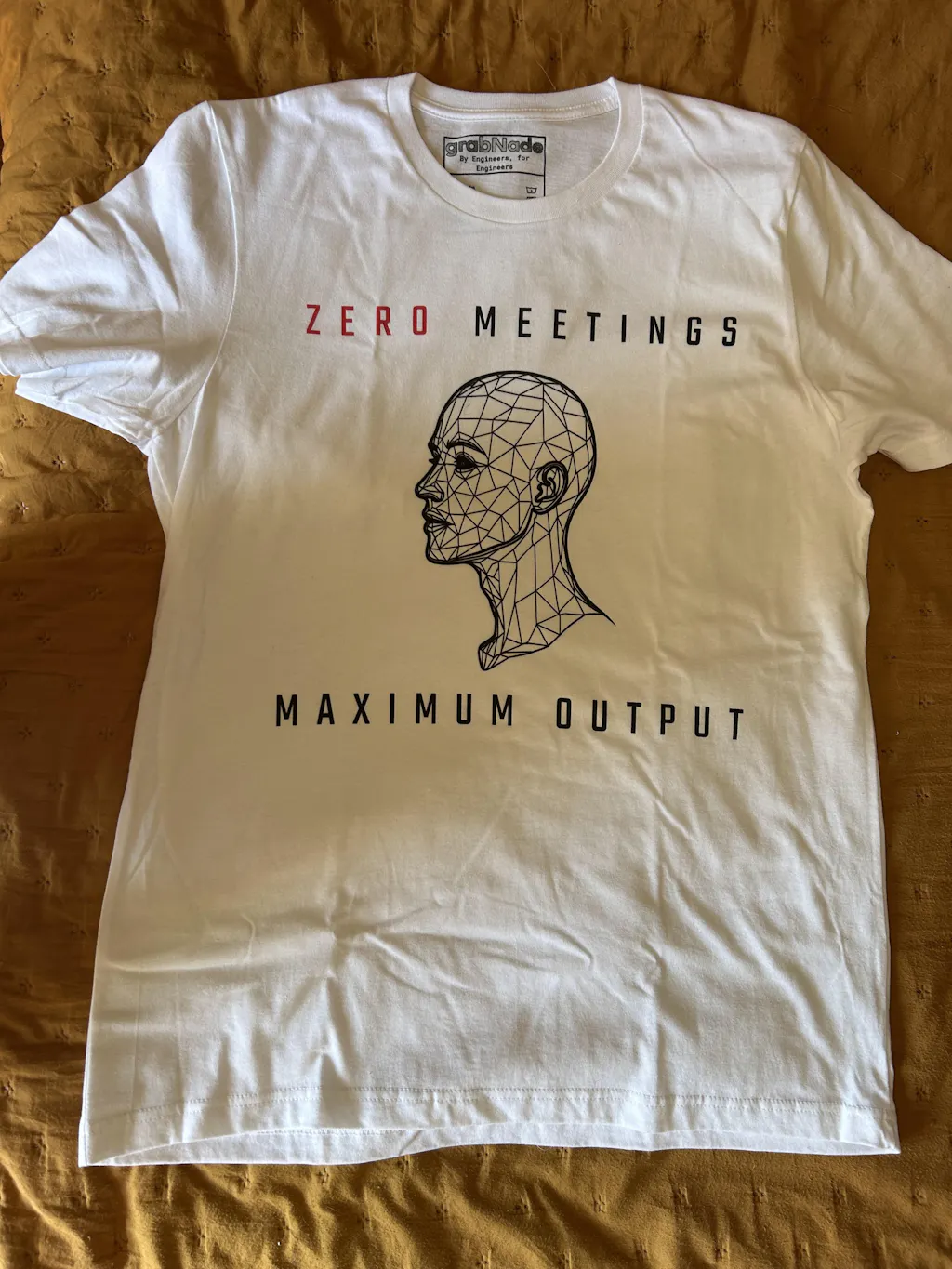
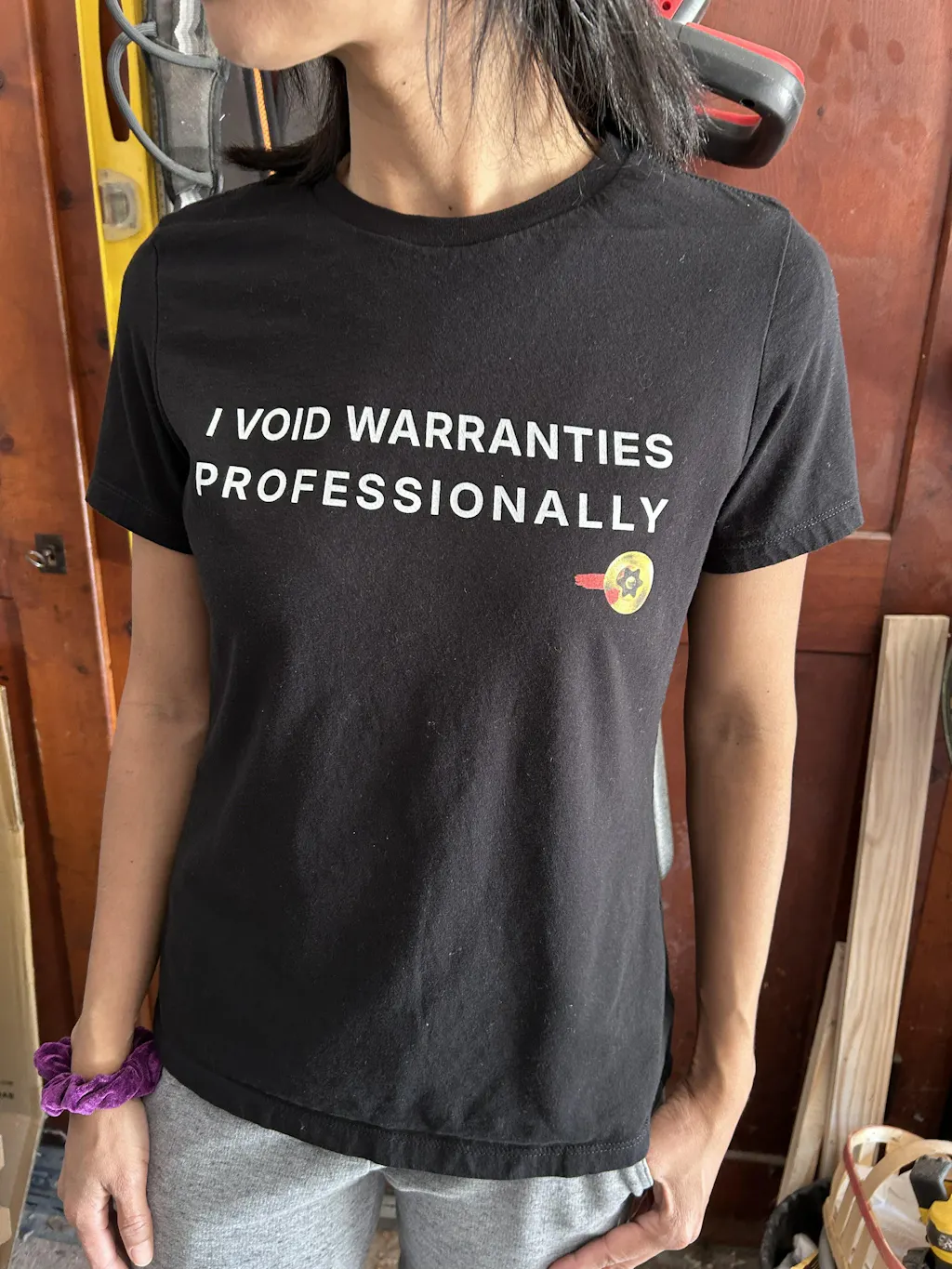
This is where brands like grabNade have an edge. Apparel made by someone who has actually spent years around machines and engineering workflows tends to avoid the fake-smart trap. The result is gear that reads like it belongs to the culture instead of borrowing it.
The trade-off between niche and wearable
There is one real trade-off here. The more technically specific the shirt, the stronger it feels to the right buyer and the narrower its appeal becomes. That can be a benefit if you want something made for your exact lane. It can be a drawback if you’re buying a gift for someone in R&D but you’re not sure how specialized their sense of humor is.
That’s why broad-insider references are usually the safest bet. Design themes around prototyping, testing, root cause, and engineering iteration tend to hit a wider range of R&D roles without becoming generic. They still feel specific, just not boxed into one process, software package, or industry.
A good shirt for an R&D engineer doesn’t need to explain itself to everyone. It just needs to feel right to the people who know. That usually means better references, better materials, and less trying too hard. If the design sounds like it came from a conference room full of marketers, skip it. If it sounds like something you’d hear between a test stand and a design review, you’re getting warmer.
The best technical apparel does what good engineering does - it solves the actual problem without adding noise. Choose the shirt that respects the work, and it’ll get worn for the same reason good tools stay in reach.