Environmental Engineering Coffee Cup: A Practical Buying Guide
What makes an environmental engineering coffee cup feel relevant to the field, rather than just engineering in general? A technical-looking graphic isn’t enough. The design should connect to the recipient’s work or interests, and the cup should suit how they’ll use it.
Search results don’t always make it clear whether a specific design is available, what a cup is made of, or how practical it will be at a desk or on a commute. A short checklist helps you compare options and avoid choosing based on a product title or thumbnail alone.
This guide covers the details to check: design relevance, material, capacity, care instructions, and fit with the recipient’s routine. Engineering mugs are one category to explore, including those from grabNade, a brand whose designs are created by people with real engineering experience. Check the current catalogue and product listing before deciding that a particular environmental engineering design is available or right for the recipient.
Key Takeaways
- Match the cup’s theme to the recipient’s interests, not just their job title.
- Choose between a field-specific design and a general engineer mug based on what the recipient is more likely to enjoy.
- Check the product listing for material, capacity, care instructions, and other details instead of assuming them.
- Follow a simple buying sequence: identify the recipient, choose a theme, verify the listing, then review the purchase details.
- Explore grabNade’s engineering mugs, and confirm the current designs and specifications before choosing one.
What makes an environmental engineering coffee cup a meaningful gift?
An environmental engineering coffee cup is a cup or mug chosen for a clear connection to environmental engineering, rather than engineering in general. That connection might reflect the recipient’s work, a technical interest, or a design they recognize from their professional world. The cup is a useful object with a personal signal built in.
Environmental engineering spans work related to environmental systems and human health. For a concise overview of the profession’s scope and applications, see What is Environmental Engineering. That breadth matters when choosing a gift: a design tied to the recipient’s actual interests can feel more considered than a generic gear, blueprint, or equation graphic. There isn’t one symbol that represents every environmental engineer.
Which environmental engineering themes might resonate?
Start with the person, then narrow the theme. Water quality, wastewater treatment, pollution prevention, and resource management are all field-related areas, but none is automatically right for every recipient. A water-focused motif may suit someone working in treatment, while pollution prevention could better reflect another person’s interests. Consider what they work on, study, or talk about before settling on a concept.
Green leaves, landscapes, and recycling symbols can suggest environmental concern, but they don’t establish a specific connection to environmental engineering. Look for a design that signals a relevant technical interest, not just a broad nature theme.
Coffee cup or mug: what should the buyer check?
Shopping listings often use “coffee cup” and “mug” as overlapping terms. Treat them as search labels, not proof of a particular format or function. Check the product photos and specifications to understand what’s being sold and whether it suits the recipient’s routine.
Confirm the product’s material and intended use in the listing. Don’t infer them from the word “mug” or from an image alone. Review any stated care instructions, dimensions, and capacity before deciding whether the item will work for daily coffee at a desk, at home, or elsewhere.
A thoughtful choice passes two tests: the design feels relevant to the recipient, and the listing gives enough detail to judge practical fit. If either is unclear, keep looking or verify the information before buying. This helps distinguish a meaningful professional gift from a generic cup with an environmental-looking graphic.
How to assess an environmental engineering cup’s design and usefulness
A good choice should pass two checks: the design has a credible connection to the recipient, and the product details suit how they’ll use it. Separate what you can see in a listing from what you need to verify. A graphic may look technical, but the written listing should provide enough context to understand its relevance and enough specifications to judge everyday use.
Does the design speak to environmental engineering?
Look for a clear link to environmental systems, not technical decoration alone. A design referencing water, waste, remediation, or another related area may fit, depending on the recipient’s work and interests. No single motif represents every environmental engineer. The American Academy of Environmental Engineers and Scientists reflects the breadth of the field through its focus on environmental engineering and science.
Use the recipient as the filter. Someone focused on water-related work may value a different concept from someone interested in remediation or resource management. If the design is ambiguous, don’t assume a leaf, globe, or generic engineering graphic makes it field-specific. Consider the wording and imagery together, then decide whether the connection feels meaningful to that person.
Which product details matter before buying?
Photos help you assess the visible design, shape, and finish. They can’t confirm performance or care requirements. Read the listing for material, capacity, care instructions, and other specifications. Don’t assume a cup is dishwasher-safe, insulated, or suitable for a particular use unless the seller states it.
Check that the photos and description appear to refer to the same item. If a specification is missing or unclear, verify it before recommending or purchasing the cup. For desk use, consider whether the listed form and capacity match the recipient’s routine. For home use, care instructions may be especially relevant if the cup will be used often.
Use this quick review before deciding:
- Visible cues: Does the design connect clearly to the recipient’s work or interests? Do the photos show the item and design clearly?
- Details to confirm: Are material, capacity, care instructions, and intended use stated in the listing?
- Routine fit: Does the described product suit where and how the recipient plans to use it?
Evaluate the design and the product specifications as separate parts of the decision. You can browse engineering mugs from grabNade, then check whether a relevant design and its product details appear in the current store.
Environmental engineering coffee cup or general engineer mug: how to choose
The choice comes down to how much you know about the recipient. A field-specific concept can feel personal when it reflects their work. A broader engineering design may be a safer fit when their speciality, preferences, or sense of humour is less clear.
| Theme | Likely recipient fit | Details to verify |
|---|---|---|
| Environmental engineering | Someone with a known interest in a related field or technical area | Whether the design makes a clear, accurate connection and is currently listed |
| General engineering | Someone with broad technical interests or an unknown speciality | Whether the wording or visual style suits their work and sense of humour |
When does a specialist design make the better gift?
Choose a specialist theme when you know what the recipient cares about. A reference connected to their environmental engineering interests can show more thought than a broad engineering motif. It might relate to their discipline or the technical problems they enjoy discussing. Check the current catalogue before assuming a specific environmental engineering design is available.
When is a general engineering mug the safer choice?
A general engineer mug may be a better call if the recipient works across disciplines, has varied technical interests, or hasn’t shared a specific speciality. Use everyday cues: the engineering topics they bring up, the style of humour they enjoy, and whether they prefer a direct professional reference or a wider technical joke. A design that feels like them is better than a niche label that misses the mark.
For more ideas beyond mugs, explore the 2026 engineer gift guide. It can help broaden the search while keeping the recipient’s work and preferences in view.
Engineering mugs are one of grabNade’s product categories. Check the current designs before treating one as a match. Compare the actual design and available product details, then choose between specialist relevance and broad appeal. Specific is not always better; choose a specific theme when you know it fits.
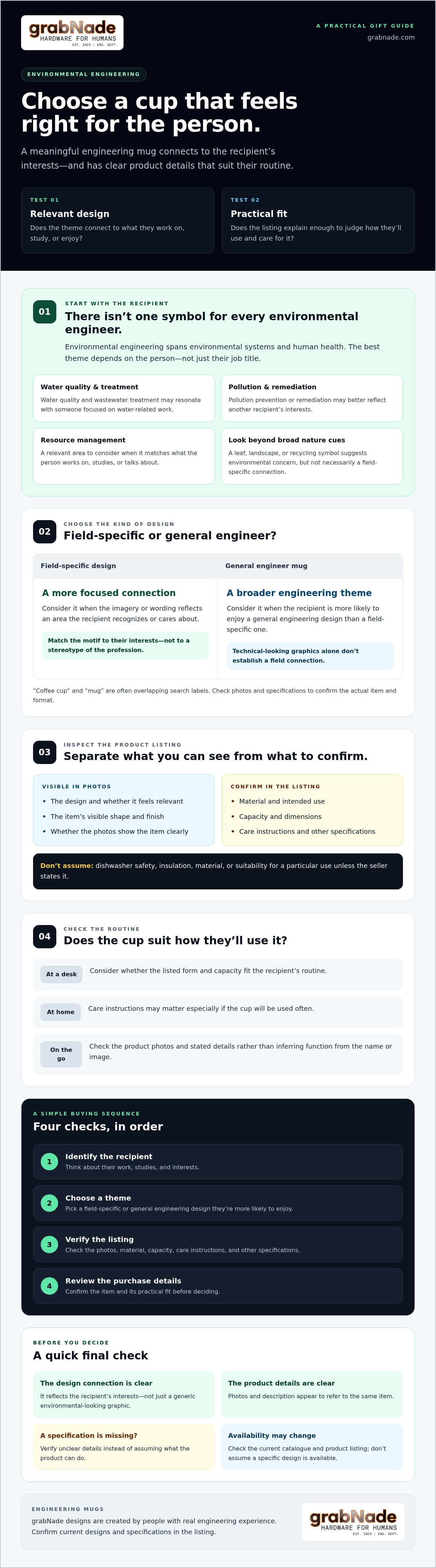
A practical checklist for buying an environmental engineering coffee cup
Use this sequence whether you’re choosing a cup for yourself or buying a professional gift. It keeps the decision grounded in the recipient, the listing, and the purchase details, rather than assumptions based on a product title or thumbnail.
- 1. Identify the recipient. Note their environmental engineering interests, work setting, and preferred design style. If buying for yourself, think about where you’ll use the cup and what kind of design you’ll enjoy seeing every day.
- 2. Choose the theme. Decide whether a field-specific reference or a broader engineering design is the better match. A specialist concept can feel personal when it reflects the recipient; a general theme may be safer when their exact interests are unclear.
- 3. Verify the listing. Confirm the product is described as a cup or mug, review the images and written description, and check the specifications. Confirm current availability in the live store before treating the design as an option.
- 4. Review purchase details. Check the store’s published information on delivery, returns, and care where available. If a key detail is missing, don’t guess. Seek clarification before relying on it.
What should you confirm on the product page?
Start with the basics: does the listing identify the item as a mug or cup, and does it explain its features? Compare the product photos with the written description. Look for material, capacity, and care instructions, and note any gaps that affect your decision. Stock status and delivery timing can change, so rely on what the live store currently states.
How can you match the gift to the person?
Consider their engineering field, where they’ll use the cup, and how much technical humour they like. A clever reference isn’t a good fit if they wouldn’t feel comfortable using it at work or at home. Prioritize the person’s taste as well as their professional identity. If apparel might suit them too, see the engineer’s uniform guide for another gift direction.
Before buying an environmental engineering coffee cup, make sure the current listing confirms both the design and the specifications you care about. Browse grabNade’s engineering mugs and verify the available designs and product details in the store.
Where to look for engineering mugs from grabNade
grabNade is worth checking if you’re comparing engineering-focused gifts. Its product categories include engineering mugs, engineering T-shirts, and engineering hoodies. The brand’s designs are created by people with real engineering experience, bringing an engineering perspective to its products.
That context can help narrow the search, but it doesn’t confirm that a particular environmental engineering design is currently available. Treat the store as a place to browse, not as proof of a specific theme, material, capacity, or feature. Check the live listing before deciding whether a mug matches the recipient or their routine.
What does grabNade offer for engineers?
The product categories include engineering mugs, engineering T-shirts, and engineering hoodies. The brand’s engineering experience informs its perspective, but don’t infer a particular discipline, design, or product specification from that alone. If you’re shopping for an environmental engineer, compare the designs shown in the current store and look for a clear connection to the recipient’s interests.
Read the product description alongside the photos. Confirm any details that matter for the intended use, such as material, capacity, and care instructions. If the listing doesn’t state a specification, treat it as unknown rather than filling in the gap based on assumptions about typical mugs.
How to take the next step with confidence
Browse the current mug listings and check whether an environmental engineering design is present. If you find one, verify its written specifications and compare them with the recipient’s needs. A professional gift should feel relevant, and the listing should give you enough information to assess it.
If no exact environmental engineering theme appears, consider a broader engineering mug or another category, such as a T-shirt or hoodie. Choose based on what the recipient would enjoy using or wearing, not just the closest available label.
For a self-purchase or a gift, use the same process: confirm the live design, check the listing, then decide. Browse grabNade’s current engineering options and make an informed choice. An environmental engineering coffee cup is a good fit only if the available design and confirmed product details work for the person who’ll use it.
Choose a Cup That Fits the Engineer
The right environmental engineering coffee cup balances professional relevance with everyday usefulness. Match the design to the recipient’s actual interests, whether that points to a specialist theme or a broader engineering reference. Then check the listing for the design, material, capacity, care instructions, and current availability instead of assuming details from a photo or product title.
grabNade’s engineering mug category is worth exploring. The brand is operated by someone with engineering experience, and its designs are created by people with real engineering experience. Check the current catalogue before treating any mug as an environmental engineering-specific option. Product details matter as much as the graphic.
Browse grabNade’s engineering mugs and check the current designs. Compare the listings, confirm the specifications that matter, and choose a cup that feels considered as well as practical. A thoughtful gift starts with knowing who it’s for, then checking the details.
Mugs with the same designs
- Engineering Is Art mug: 11 oz ceramic
- Root Cause CAPA Approved mug: 11 oz ceramic
- Error 404 mug: 11 oz ceramic
Browse more in all 11 oz mugs.
Frequently Asked Questions
What is an environmental engineering coffee cup?
An environmental engineering coffee cup is a cup or mug chosen for a design or message connected to the field. That connection could reflect work in water quality, waste management, pollution prevention, or another relevant area. The phrase describes what a shopper is looking for, not a guaranteed product specification. Before buying, check the current listing for the design, material, capacity, care instructions, and other details that matter.
Does grabNade sell an environmental engineering mug?
grabNade sells engineering mugs, but a specific environmental engineering design may not be available. Check the live store for current designs and listing details rather than relying on a search phrase to prove availability. If you don’t see a discipline-specific option, consider whether a broader engineering-themed mug would suit the recipient. Verify the product’s stated specifications before purchasing, including details that affect how or where it can be used.
What should I look for in a coffee cup for an environmental engineer?
Start with a design that reflects the recipient’s actual interests or speciality, then check the product listing. A reference connected to their work may feel more personal than a generic technical image, but taste matters too. Confirm the stated material, capacity, and care instructions, and consider whether the cup suits use at home or work. Don’t assume features such as insulation or dishwasher safety unless the listing explicitly confirms them.
Is an environmental engineering mug a good gift for an engineer?
It can be a thoughtful gift if the design matches the recipient’s interests and the cup suits their routine. A specialist reference may feel more personal than a general engineering design, but only if it fits the person’s field and taste. Check that the design is currently listed and review its stated specifications. If you’re unsure about their speciality, a broader engineering-themed mug may be a safer choice.
How do I choose between an environmental engineering mug and a general engineer mug?
Choose an environmental engineering theme when you know the recipient’s interests and can confirm a suitable design is available. A general engineer mug may be a better fit if their speciality is unclear or they enjoy engineering broadly. Compare the actual designs, recipient fit, and product details. Don’t treat a themed search result as proof that a particular mug is currently for sale. Check the live listing before deciding.
What product details should I verify before buying an engineering coffee cup?
Check the current listing for the item type, material, capacity, care instructions, and other specifications relevant to the recipient. Compare the product photos with the written description, and confirm current availability in the store. Don’t assume the cup is dishwasher-safe, insulated, or made from a particular material unless the listing states it. If delivery or returns matter, review the store’s published information before placing an order.
Can I find other engineering gifts if a specific mug design is unavailable?
Yes. If the current mug listings don’t show a suitable environmental engineering theme, consider a broader engineering mug or another category, such as engineering T-shirts or hoodies. Match the alternative to the recipient’s interests, style, and intended use. Browse the current catalogue rather than assuming a particular design or product is available, then check its listing details before buying. A relevant, well-verified alternative can still make a considered gift.